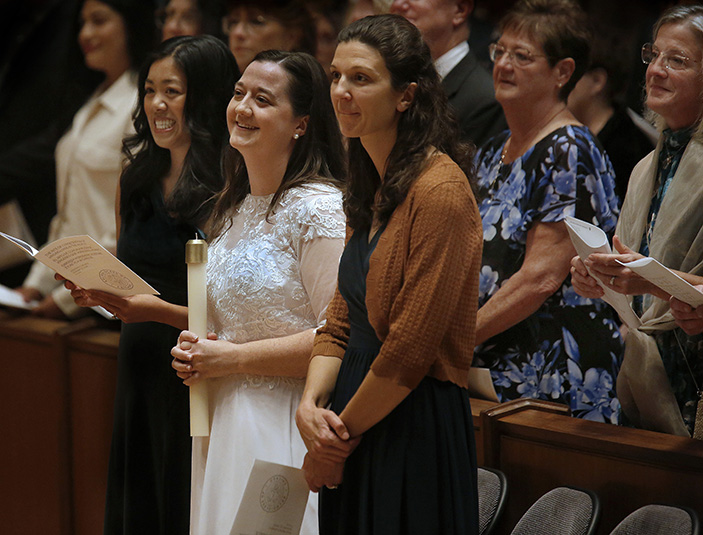
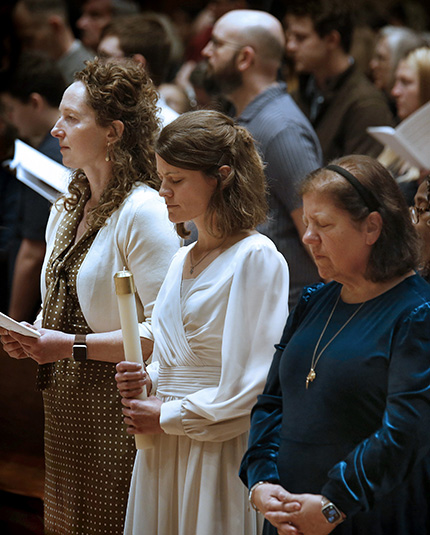
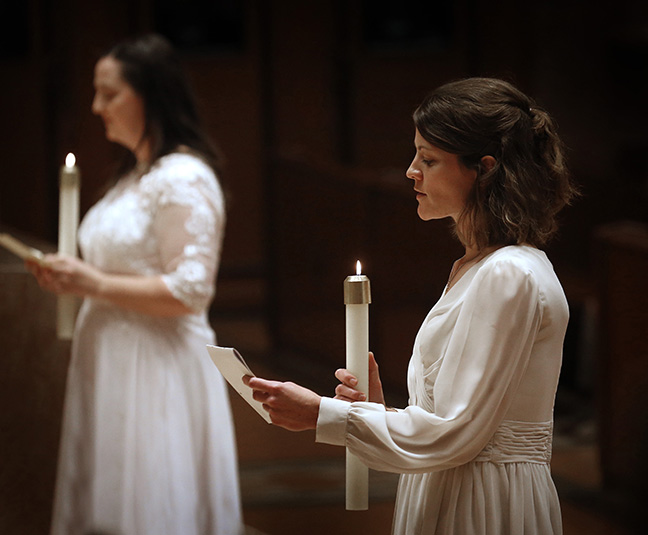
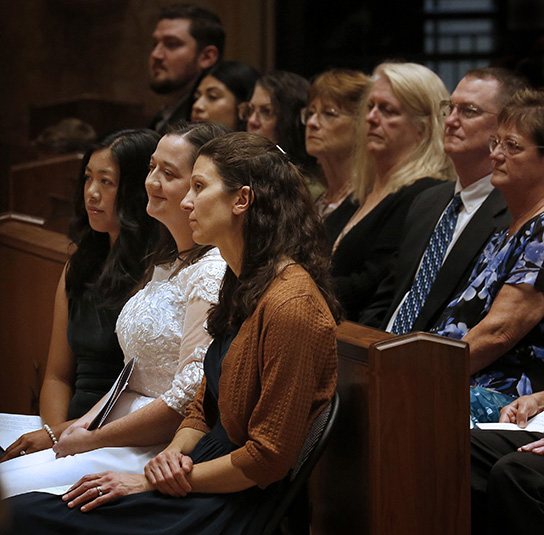
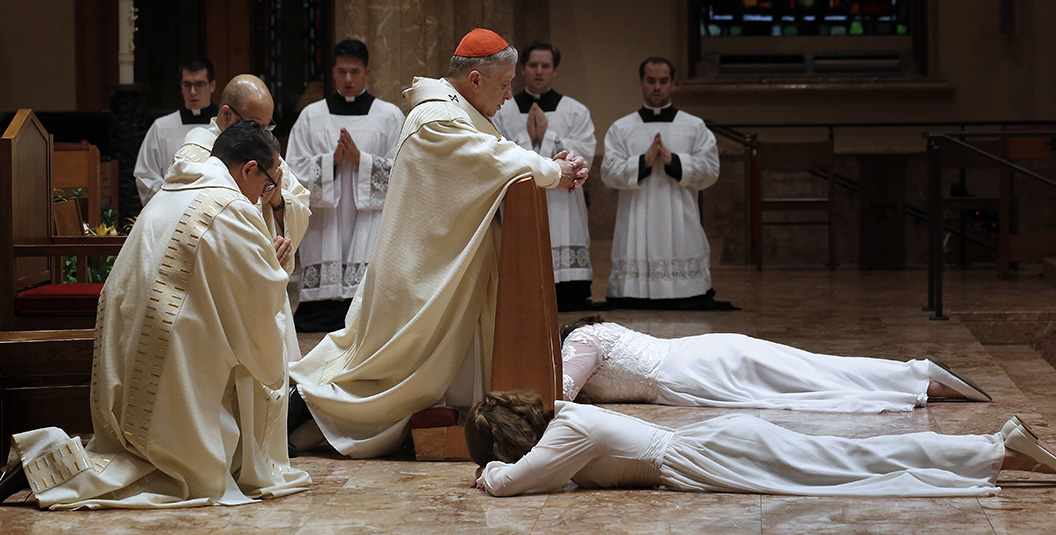
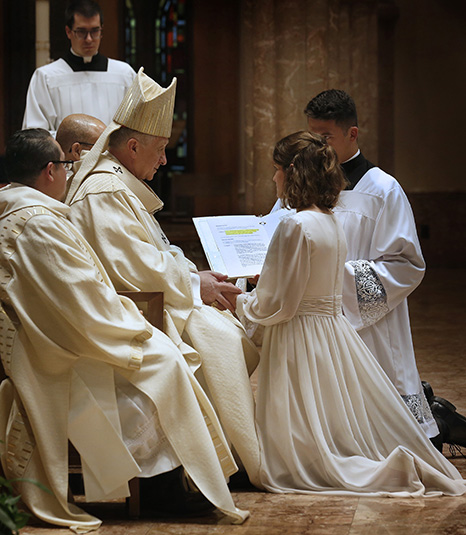
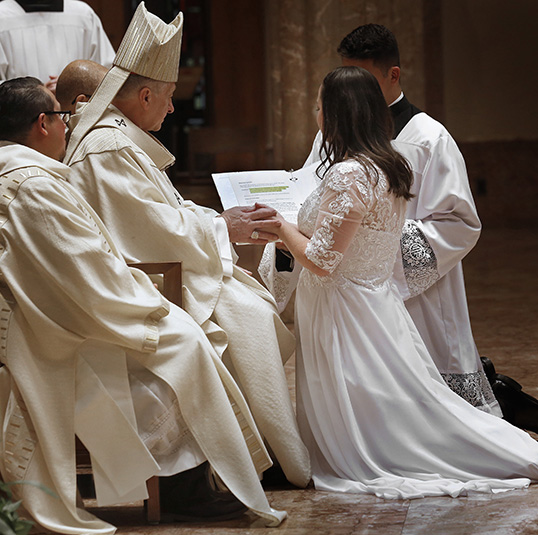
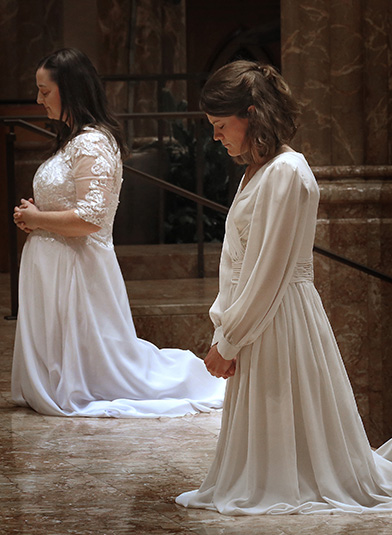
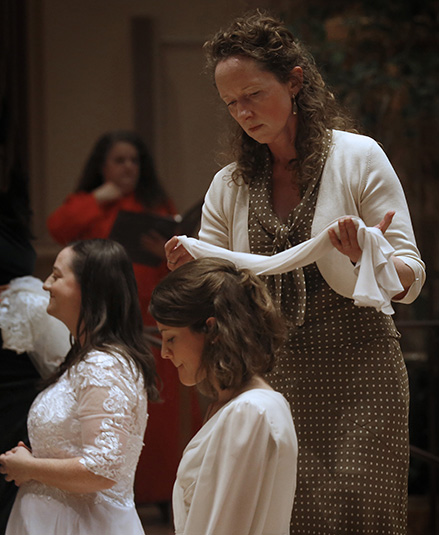
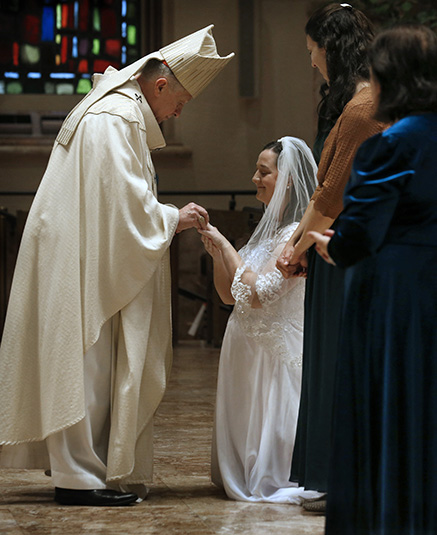
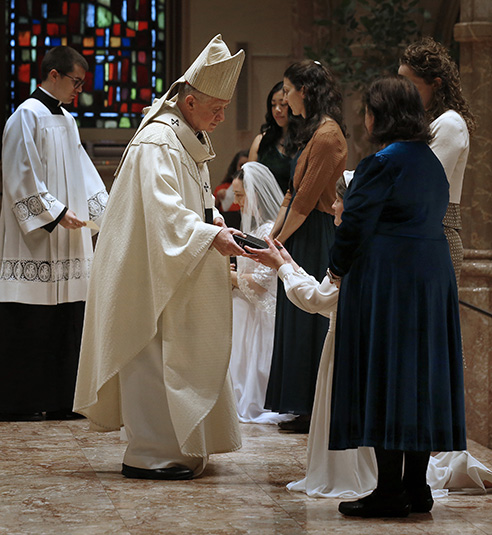
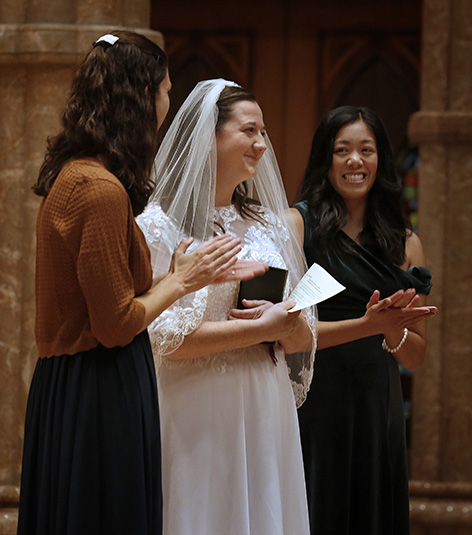
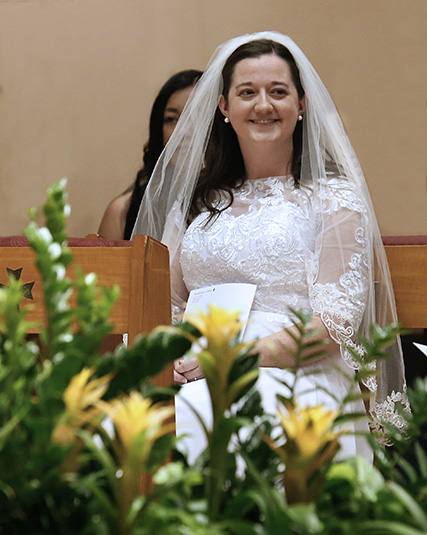
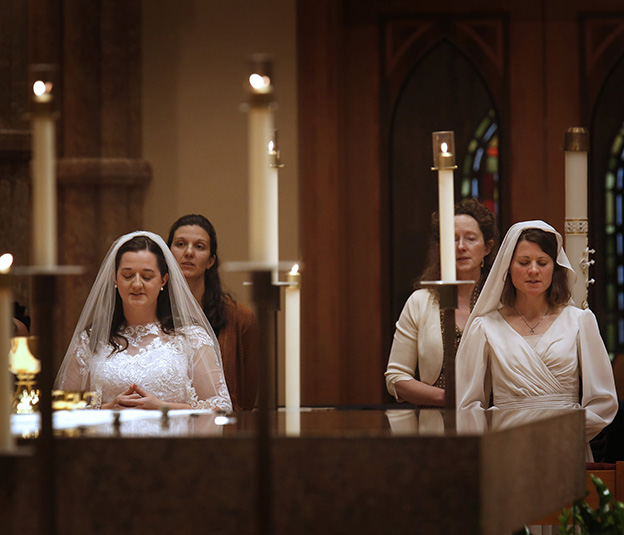
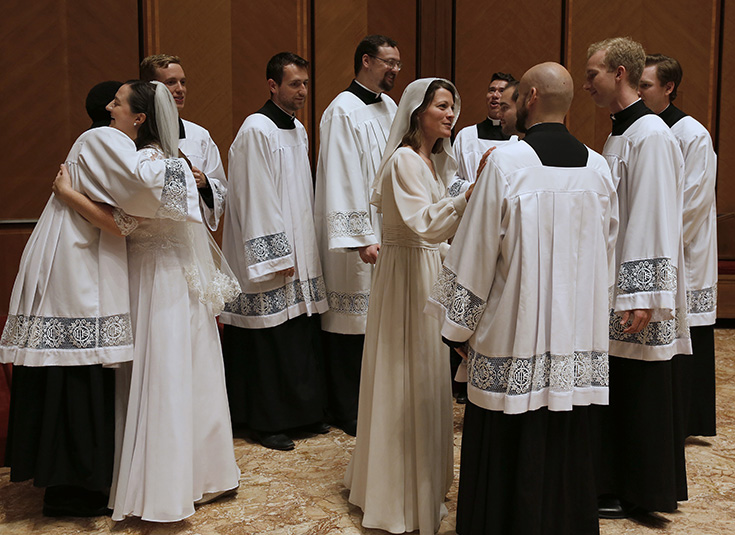
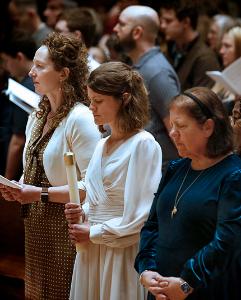
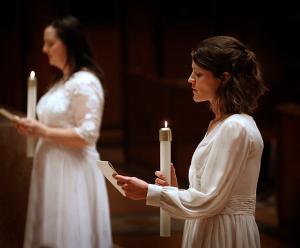
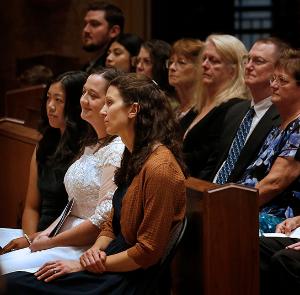
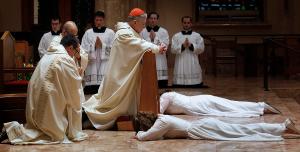
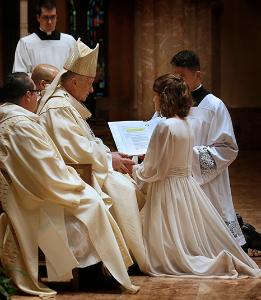
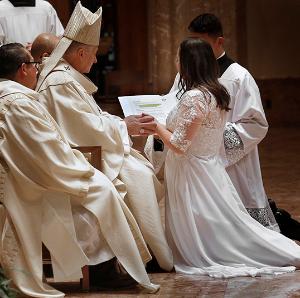
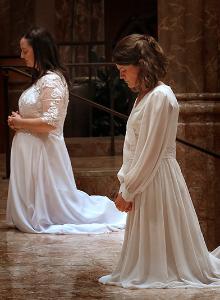
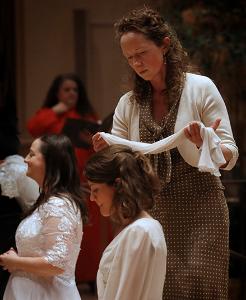
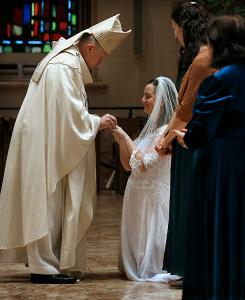
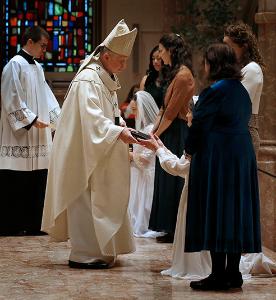
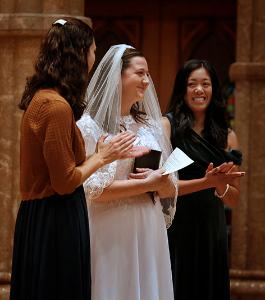
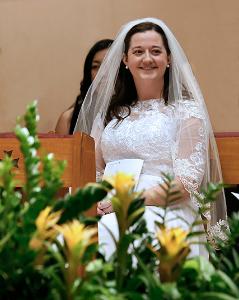
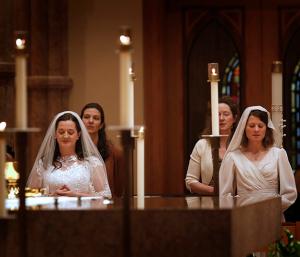
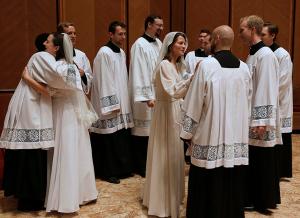
While many in the Chicago area were preparing for the onslaught of trick-or-treaters at their doors, Rebecca Siar, 33, and Emily Barnum, 30, were entering into one of the oldest vocations for women in the Catholic Church: consecrated virginity.
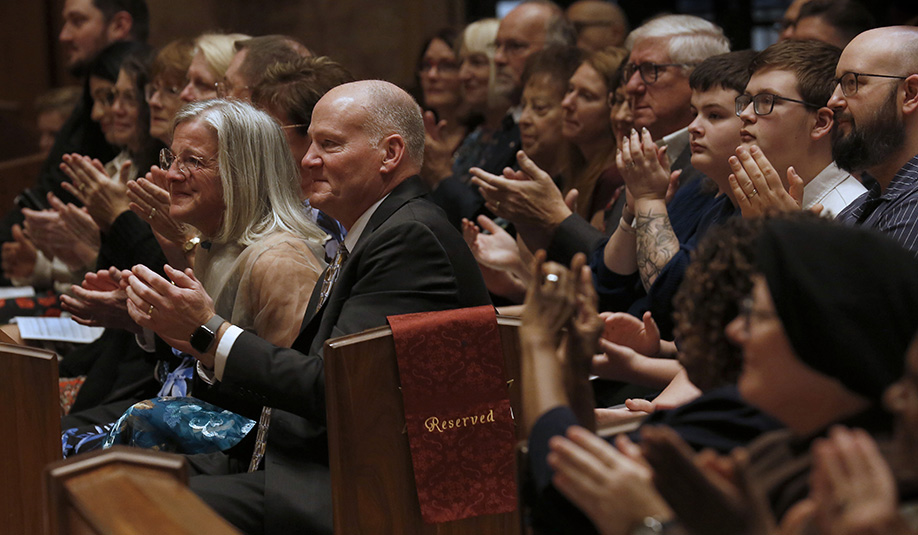
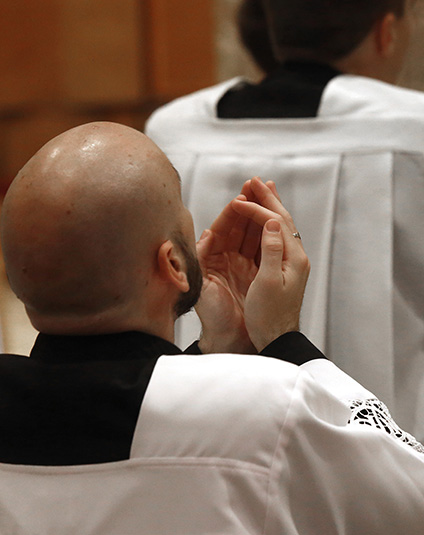
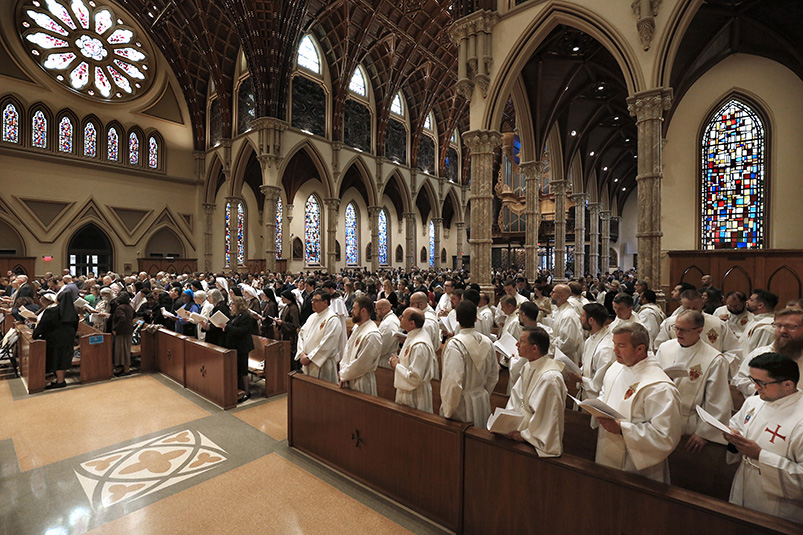
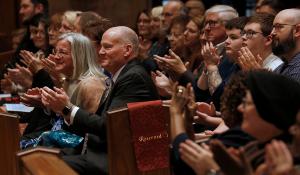
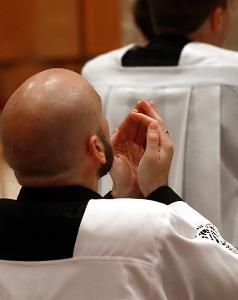
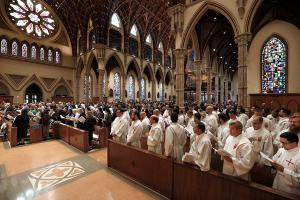
Auxiliary bishops and 50 priests joined Cardinal Cupich for a packed consecration Mass on Oct. 31. See Cardinal Cupich's column.
The Catechism of the Catholic Church explains consecrated virginity like this: “Virgins who, committed to the holy plan of following Christ more closely, are consecrated to God by the diocesan bishop according to the approved liturgical rite, are betrothed mystically to Christ, the Son of God, and are dedicated to the service of the Church.’ By this solemn rite (Consecratio virginum), the virgin is ‘constituted … a sacred person, a transcendent sign of the Church’s love for Christ, and an eschatological image of this heavenly Bride of Christ and of the life to come,’” (923).
The custom dates back to the first days of the church and predates the consecration of women in religious communities such as the Carmelites of Benedictines.
With the addition of Siar and Barnum, there are 10 consecrated virgins living out their vocations in the Archdiocese of Chicago, according to Felician Sister Mary Beth Bromer, archdiocesan vicar for religious.
Despite it being a very countercultural vocation, God still calls women to consecrated virginity, she said.
“God continues to call and invite women and men to total commitment to him and the people, and that has started from the very beginning,” Sister Mary Beth said. “And he walks with us every day, calling us to each to a different vocation — some to consecrated life of many forms, consecrated virgins being one, religious life being another. It’s God helping us to know what is ours to do to make a difference in this world.”
Unlike religious women, or sisters, consecrated virgins do not take vows or make promises and do not take a special title, such as “sister.” They live in the world independently and work and serve the Lord, much like laypeople. They commit to praying the Liturgy of the Hours every day, as priests and religious do. They also receive rings and veils at their consecrations as visible signs of their vocations.
Siar and Barnum are the first to complete a new three-year formation process for consecrated virgins that Sister Mary Beth developed at the request of Cardinal Cupich.
Consecrated virgins are considered “brides of Christ” and both Siar and Barnum wore white dresses during the Mass.
The Mass included the liturgical rite for the consecration of virgins. That rite elevates the consecration above making a private promise to serve the Lord as a virgin, Siar said.
“Even if I make a private resolution, in the rite itself, that private resolution is received by the bishop and then consecrated, so it’s elevated and fortified in a way that’s very special,” she said. “We receive graces that are unique in the rite to help us persevere in our private resolution.”
As with many men and women who discern religious vocations, Barnum’s and Siar’s families and friends had mixed responses to their news.
Siar has an uncle who is a priest and a “very Catholic family” who welcomed the news that she was to be consecrated.
“Ultimately, they were like, ‘Yeah, if this is what the Lord’s calling you to, who are we to say anything else, right?’” she said. “My dad had a good response, because he said, ‘I’m getting the best son-in-law in the world.’”
As a convert to Catholicism, Barnum said her parents needed some time to understand what she felt God was calling her to.
“My dad at first was actually really angry and didn’t understand. I think he was mad at God and the church,” Barnum said.
But after she spent time living the vocation privately, her parents accepted God’s vocation for her and even entered the Catholic Church themselves.
Both women said their vocations started bearing fruit long before the formal consecration. When they share their vocation with people — whether it be colleagues, people in the checkout line at the grocery store, security guards or whomever — they overwhelmingly receive positive responses, they said, and they often find opportunities for evangelization.
“I’m talking like a hospital security guard, where it had opened the door of him being like, ‘You know, I’ve never figured out this God thing,’” she said. And I was able to affirm him in his belovedness and tell him ‘You are a beloved son of the Lord.’ And he’s like, ‘Nobody’s told me that before,’” Siar said.
“I’ve noticed that sometimes people who are not practicing a religion have an openness to it that’s really striking and beautiful,” said Barnum, who is a New Testament scholar. “I’ve had interesting conversations about sexuality and the integrity of the human person and how we’re made for self-gift. I have noticed that it opens up beautiful conversations in the trenches, because I’m at a secular university.”
While no one is ever totally ready for a major life step into a vocation like theirs, Siar said that for her, it has been a long time coming.
“A lot of people have said, ‘Are you ready?’ I think with any vocation, the answer is going to be the same. It’s like, how are you ever fully ready? You’re not,” she said. “I’ve prepared my heart to be able to say yes one day at a time, every single day, through the highs, through the lows. That’s as ready as I can be.”
She discerned marriage and religious life, but kept feeling called to the vocation of consecrated virginity. She had to surrender fully to God’s will before she accepted the call, Siar said.
“Ever since then, everything I learned was just deeper affirmation,” she said. “This is exactly how he made my heart to love. And it just all made sense,” she said.