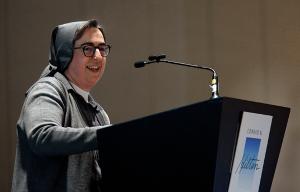
Catholics must insist on the dignity of every human being as the world reckons with the advent of artificial intelligence and what it will mean for the way society is organized, Salesian Sister Alessandra Smerilli said Oct. 15.
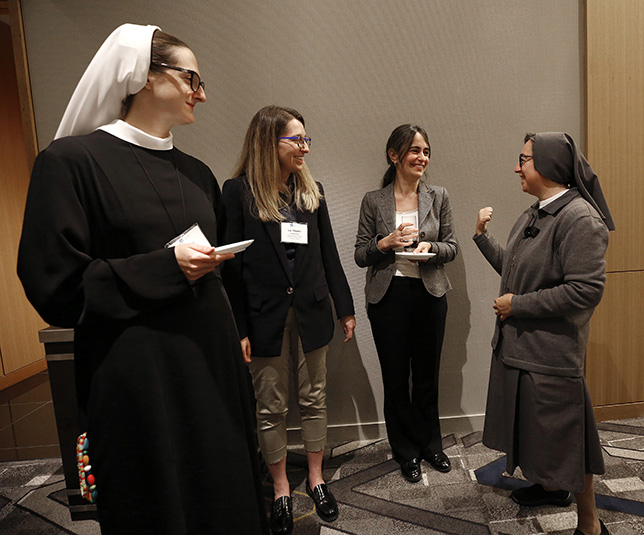
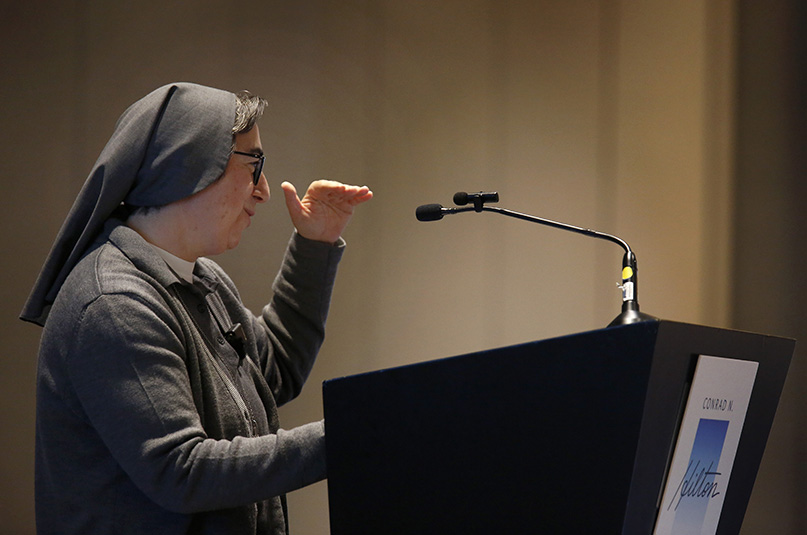
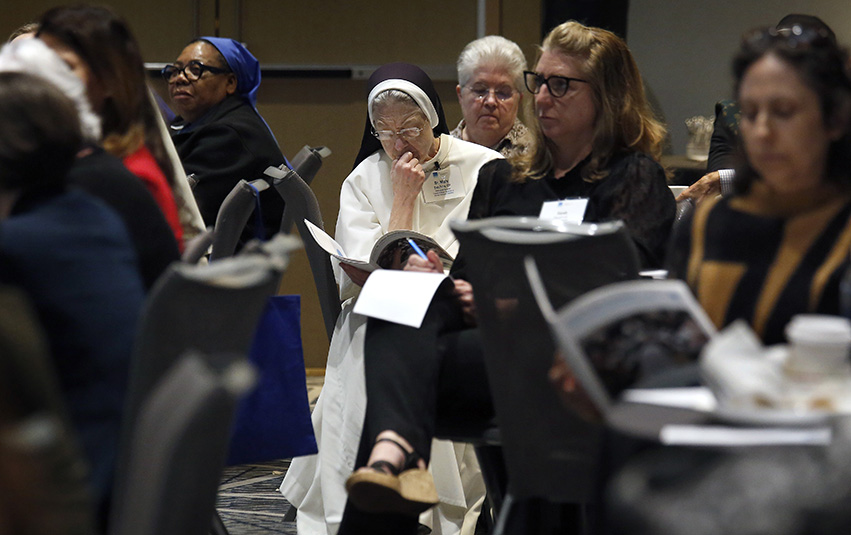
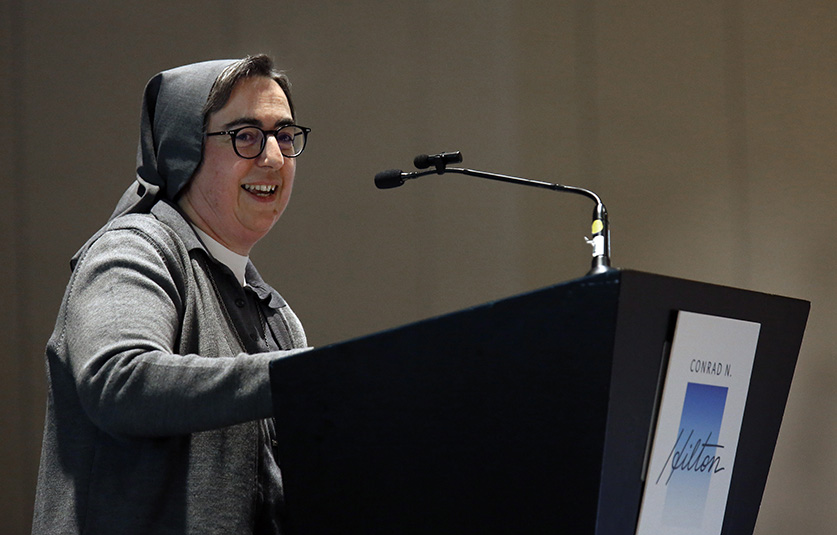
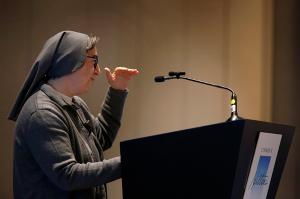
Sister Alessandra, prefect of the Vatican’s Dicastery for Promoting Integral Human Development, delivered her message at the U.S. Convening of the Conrad N. Hilton Foundation’s Catholic Sisters Initiative, which took place Oct. 14-16 in Chicago at the Marriott Marquis Hotel.
The sisters she was speaking to, who work to promote the dignity of people living on the margins, are in a good position to share that message, she said.
Sister Alessandra, an economist by training, was named prefect of the Dicastery for Promoting Integral Human Development in June, after serving as the dicastery’s secretary since 2021.
“I come to you as head of a dicastery of the Holy See, but first of all, I come to you as a sister,” she told the gathering as she introduced her talk, “Solidarity in Uplifting Human Dignity: Global Perspective — A Message of Hope.” “I learned more about the Gospel from the poor than from my books.”
Integral human development, she said, takes into account every person, and the whole person, with respect for their God-given dignity.
“I think that for you, this is not an idea,” Sister Alessandra said. “You were doing integral human development in schools and hospitals, and working with women and children long before it became a phrase in our documents.”
She referred to Pope Leo XIV’s encyclical “Magnifica Humanitas,” released in May, 135 years after his namesake, Pope Leo XIII, issued “Rerum Novarum” in the midst of the Industrial Revolution.
“Magnifica Humanitas” calls for “safeguarding the human person in the time of artificial intelligence,” because, while technology is neither a solution to humanity’s problems nor inherently evil, “technology is never neutral, because it takes on the characteristics of those who devise, finance, regulate and use it” (MH 9).
The way artificial intelligence has developed leaves many people out, she said. It creates systems that use people’s data to learn, to decide what information to share with others and to make decisions about people, but it is not a person, she said. It is without morals, conscience or responsibility.
“And so the question is, when we speak about technology and artificial intelligence, who is counted? What happens to the whole person?” she said.
People who are not online at all — more than 2 billion worldwide — are invisible to AI, she said.
The lesson, she said, is to make sure that the human community understands how the tools it is using work, and how to make sure that everyone is counted.
“What the model does not measure, it cannot see, and what it cannot see, it ignores,” she said.
“There are 7,000 languages in the world,” she noted, but AI language models are built on English and a few other languages.
At the same time, AI models make decisions based on the data they have, but not with the knowledge that human beings can change, can grow, can forgive and seek forgiveness, can even reestablish trust after it has been broken.
“Systems do not know patience, mercy, forgiveness,” she said. “It cannot know that the person in front of us can change.”
Sister Alessandra said she looks to the future with hope, which, she said, is different from optimism.
“Hope is the decision to keep building,” she said.
It was the decision made by the many communities of women religious that were born during the Industrial Revolution and took on the work made necessary by the social changes that happened: the creation, for example, of hospitals and schools, she said.
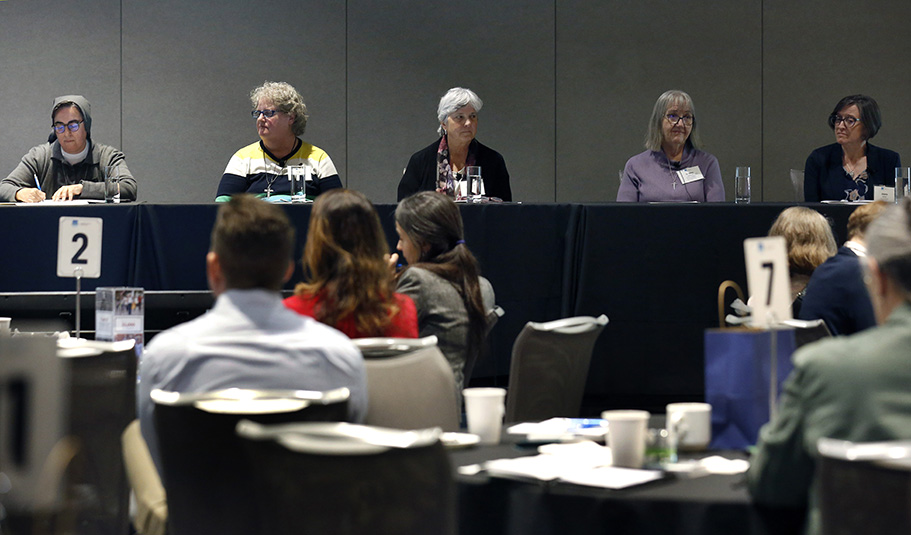
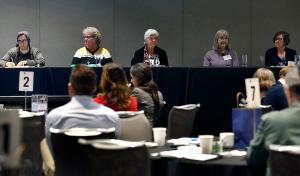
Sister Alessandra’s talk was followed by a panel discussion, “Solidarity in Uplifting Human Dignity — Grassroots Perspective,” which she joined, along with women who lead initiatives to help marginalized people, from migrants at the California-Mexico border to young asylum seekers to economically disadvantaged children in Selma, Alabama, among other ministries to marginalized people.
They agreed that the key to their ministries is being present to people, meeting them where they are and acting with love.
Among the panelists was Franciscan Sister Maureen Jerkowski, executive director of Bethany House, a home for young women asylum seekers and their children that is located in Archdiocese of Chicago.
Since its creation in 2017, Bethany House has offered a home 146 women and 68 children from 30 countries, Sister Maureen said.
The home, she said, “is a safe, welcoming space where we treat women not as cases or statistics, but as human beings with stories, strengths, hopes and dreams. … We do not give another person their dignity. Dignity is already theirs.”
Sister Alessandra said that the dicastery can help Catholic organizations in different regions connect with one another and learn from one another, because while some characteristics are different, everyone is dealing with the same issues.
Among those issues is migration, something that has been brought up by the bishops of every country she has met who have come to Rome for their ad limina visits.
Sacred Heart Sister Lisa Buscher is the chair of the Collaborative for Border Ministries, Transborder Coalition for Border Ministries. The group works with migrants on both sides of the California-Mexico border.
The work, she said, has changed, as more people are heading south than north, and members of the coalition are working with them on adjusting to their new circumstances.
“It’s showing up, being present and loving,” Sister Lisa said.