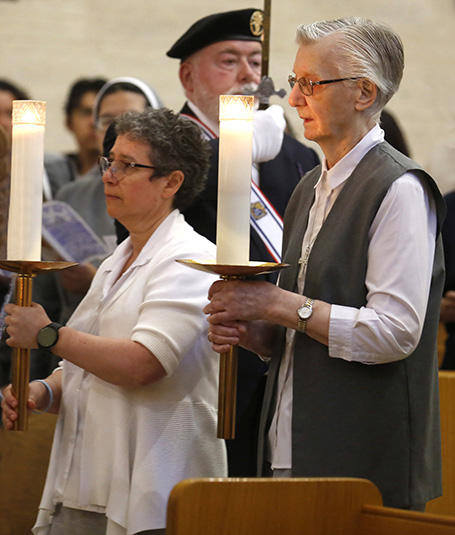
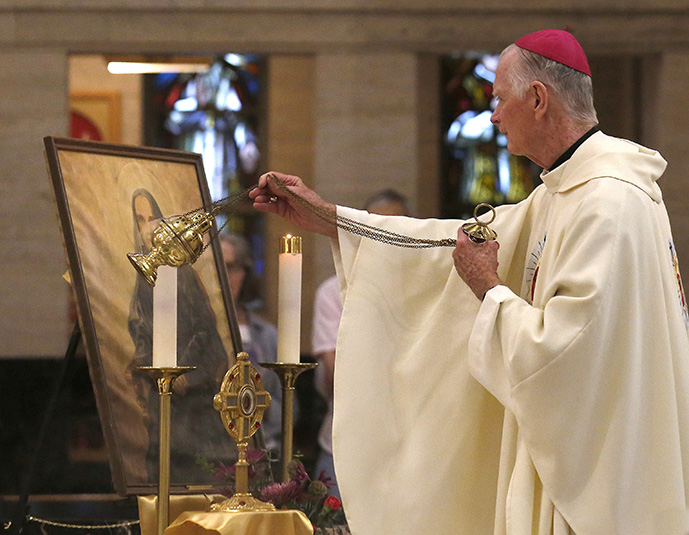
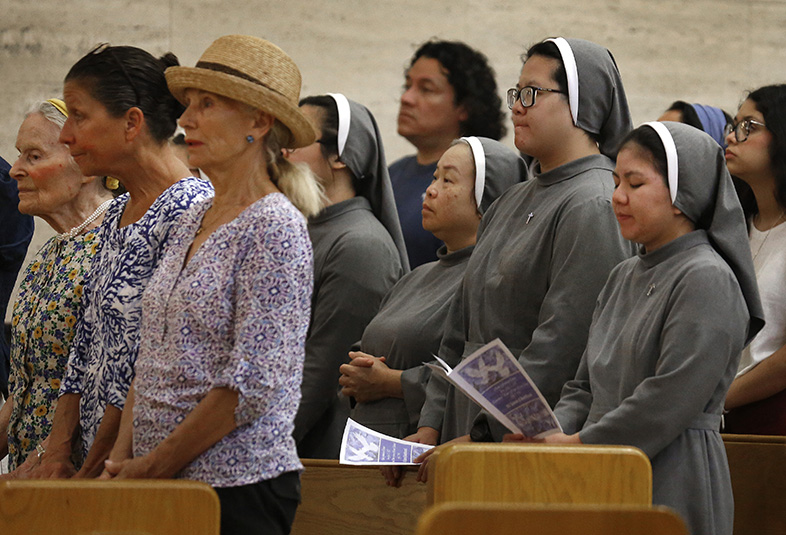
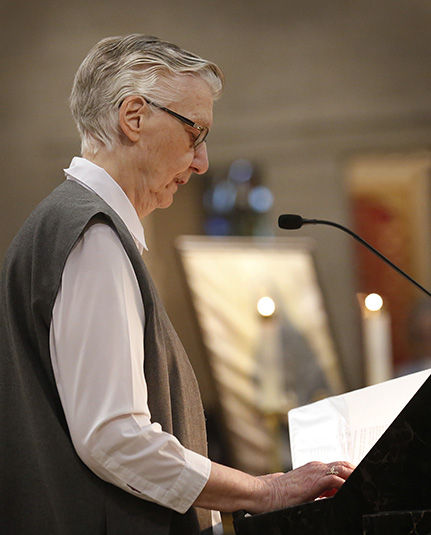
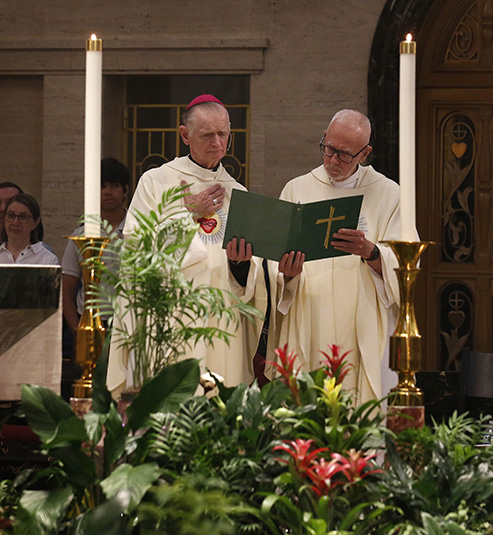
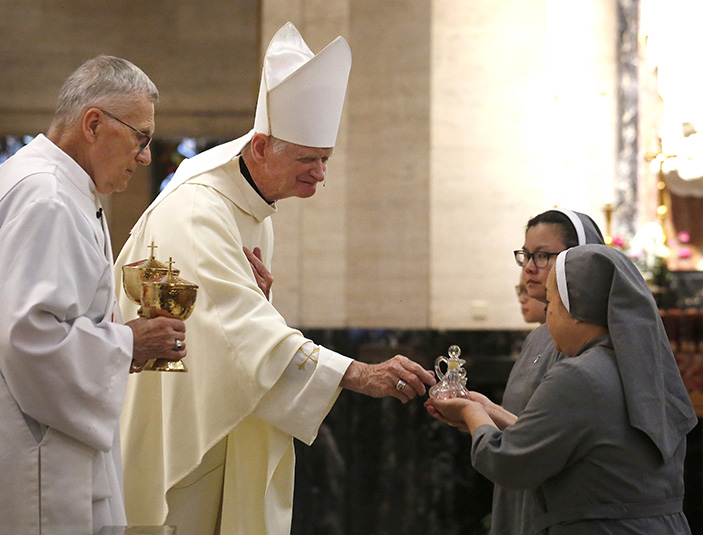
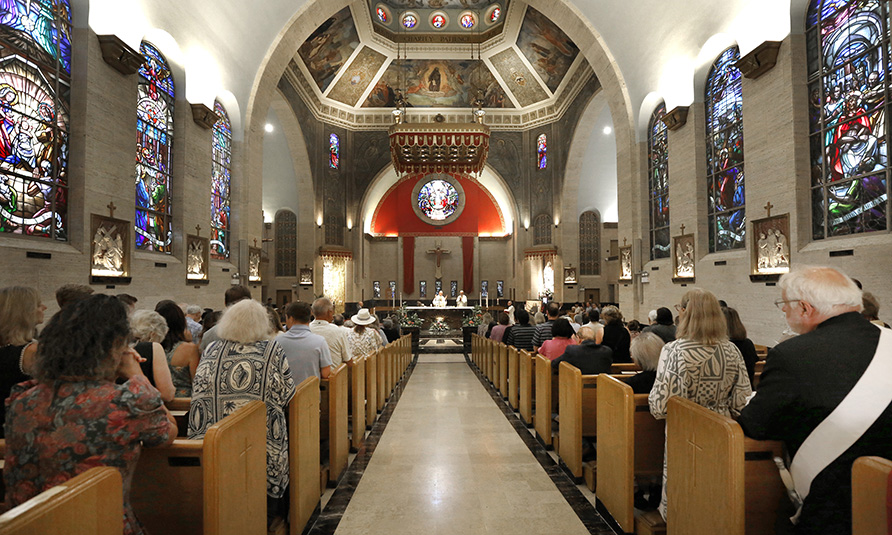
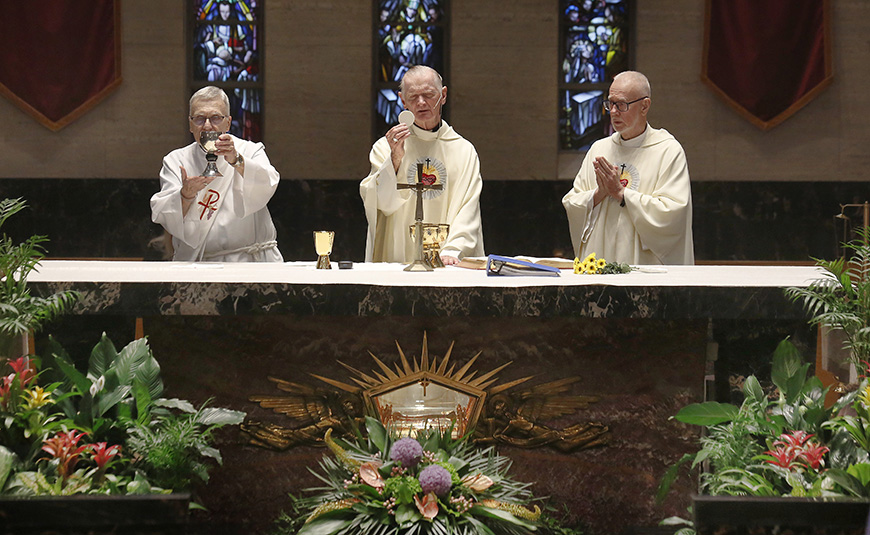
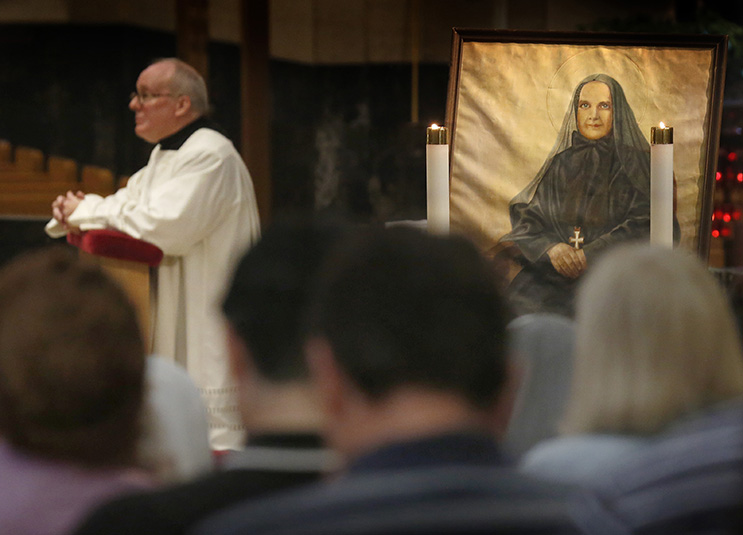
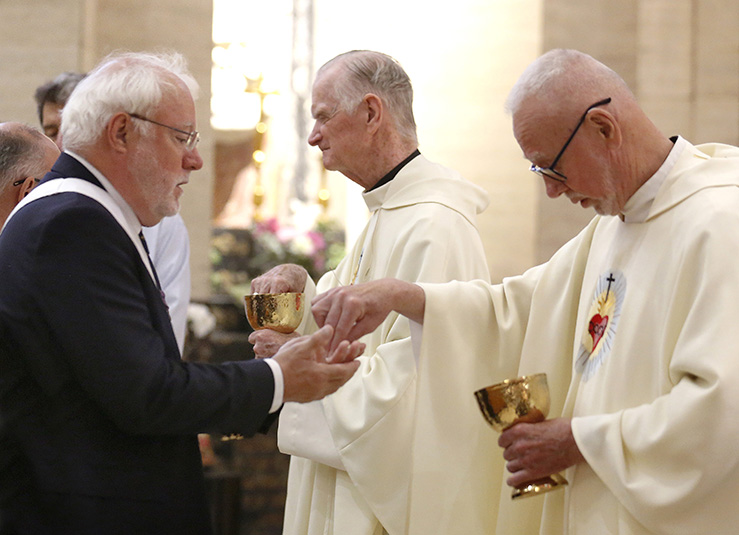
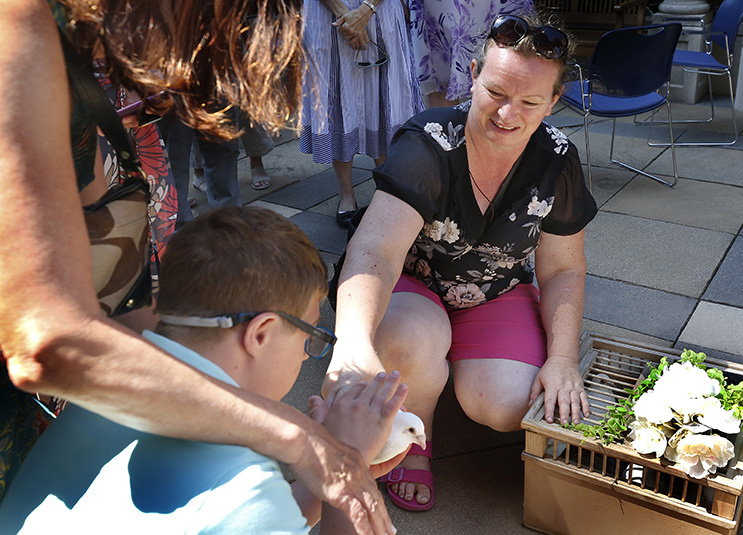
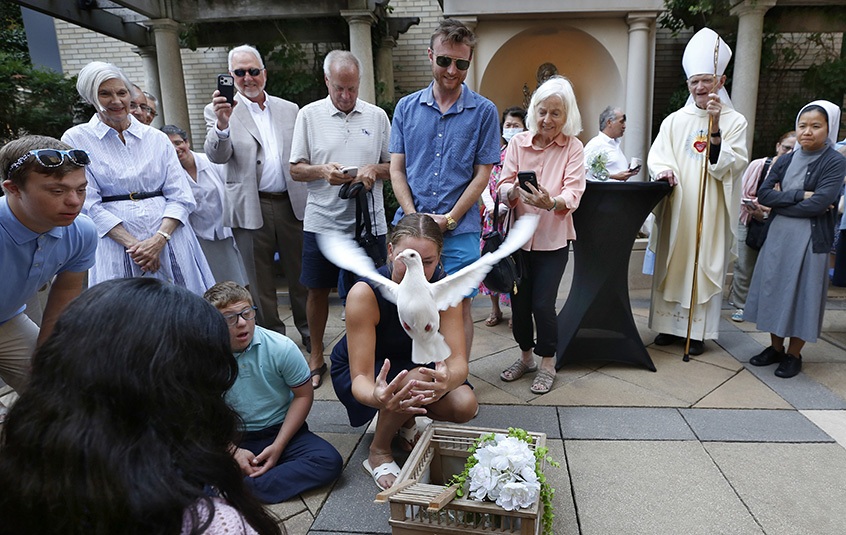
While the city sweltered in a heat wave, friends and supporters of the National Shrine of St. Frances Xavier Cabrini gathered at the shrine to celebrate the 80th anniversary of St. Frances Xavier Cabrini’s canonization and to commemorate what would have been her 176th birthday on July 11 and 12.
The two-day celebration featured a performance by a children’s and an adult choir, ethnic food tastings and Masses.
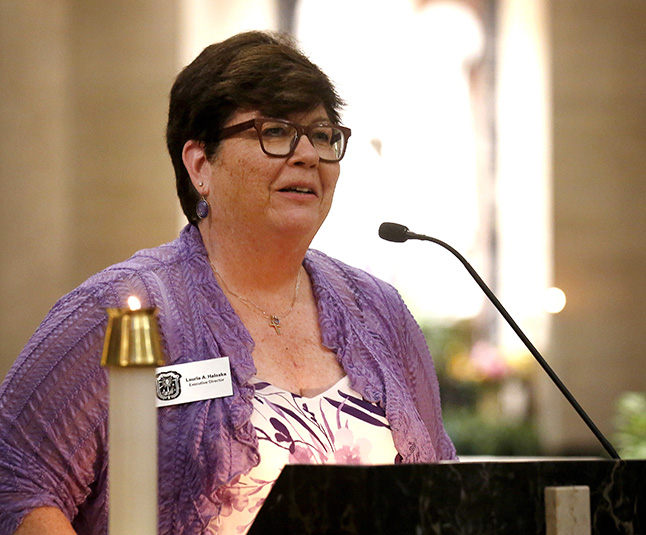
“We needed to honor the legacy of the first U.S. citizen who was elevated to sainthood,” said Laurie Halaska, the shrine’s executive director. “The canonization of Mother Cabrini had such a timely impact to the U.S. The U.S. was just starting to recover from the devastation of World War II and her elevation to sainthood was seen as a powerful symbol of global healing, hope and compassion.”
Today, the world continues to need Mother Cabrini’s witness of healing and understanding, she said.
“The community is so excited and joyful,” Halaska said. “With Pope Leo XIV just visiting Mother Cabrini’s birthplace in Sant’Angelo Lodigiano on June 20, 2026, the world and, I feel, especially Chicagoans are feeling a resurgence of pride, compassion and understanding of Mother Cabrini’s life and legacy,” Halaska said.
Mother Cabrini died at the site of the shrine, located at 2520 N. Lakeview Ave., on Dec. 22, 1917.
St. Frances Xavier Cabrini was born in Lombardy, Italy, in 1850. She was one of 13 children in her family. At 18, she said she wanted to become a nun, but was refused because of her frail health.
She helped her parents until their deaths, and then worked on a farm with her brothers and sisters.
One day a priest asked her to teach in a girls’ school. She stayed there for six years and then, at the request of her bishop, founded the Missionary Sisters of the Sacred Heart to care for poor children in schools and hospitals. She came to the United States with six religious sisters in 1889 to work among the Italian immigrants at the urging of Pope Leo XIII. She became a U.S. citizen in 1909.
Filled with a deep trust in God and endowed with a natural administrative ability, she founded schools, hospitals and orphanages in the aid of Italian immigrants and children. At the time of her death, she had founded 67 institutions around the world, including Columbus Hospital, Columbus Extension for the Poor at Lytle and Polk streets, and Assumption School at 319 W. Erie St., all in Chicago.
In 1946, she became the first American citizen to be canonized when she was elevated to sainthood by Pope Pius XII.
Mother Cabrini had such a wide following that Cardinal Samuel Stritch helped build the shrine at Columbus Hospital nine years after her death to serve the thousands of pilgrims who flocked to the hospital to see the room where the saint died.
Visitors to the shrine can get a glimpse into the saint’s life at the shrine’s small museum, which includes items belonging to Mother Cabrini and her reconstructed bedroom, including the wicker chair in which she died.
Mother Cabrini’s life and legacy is also honored in four frescoes that adorn the shrine’s ceiling. A relic of Mother Cabrini — her right upper arm bone — is housed in the base of the shrine’s altar.
In a letter to the shrine for the celebration, Cardinal Cupich praised Mother Cabrini’s fearless spirit.
“Mother Cabrini’s small stature belied her formidable presence as a pioneering leader in education, healthcare and social services on three continents,” he wrote. “Compelled by trust in God’s providence and compassion and justice for the vulnerable, she was undaunted by setbacks or obstacles. Her deep faith, savvy business acumen and indomitable spirit despite health challenges, inspired countless people as she lived the Gospel of Jesus Christ in word and action.”
People continue to be inspired by Mother Cabrini today, especially immigrants, Halaska said.
“As the patron saint of immigrants, Mother Cabrini’s legacy continues to highlight the challenges of migration and our need to have compassionate social services,” Halaska said. “Life has never been easy for immigrants, but Mother Cabrini set the bar for getting through these endless debates over the treatment of the vulnerable and