When St. Procopius Parish was formed a century and a half ago, an offshoot of St. Wenceslaus at Desplaines and DeKoven Streets on the West Side, it was the third Bohemian national parish in what was then the Diocese of Chicago.
Parishioners and St. Wenceslaus pastor Father William Coka organized the parish in 1875 and, on Easter Sunday in 1876, celebrated the first Mass in a building purchased from a Methodist congregation and moved to 19th Street and Halsted Streets, in a neighborhood named for a city in modern Czechia.
Then the Methodists found out that the Bohemian Catholics were using the building before it was fully paid for and locked the doors, according to “A History of the Parishes of the Archdiocese of Chicago.”
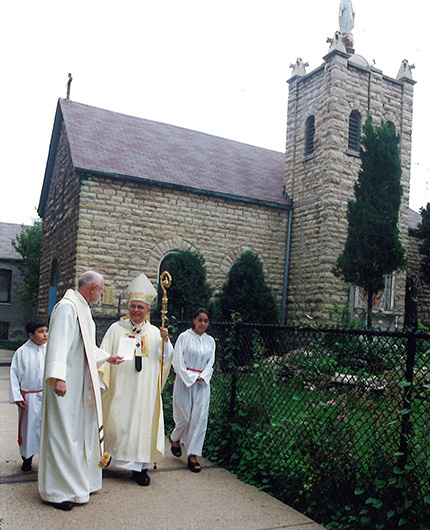
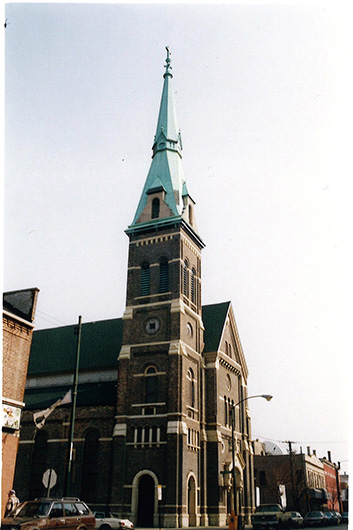
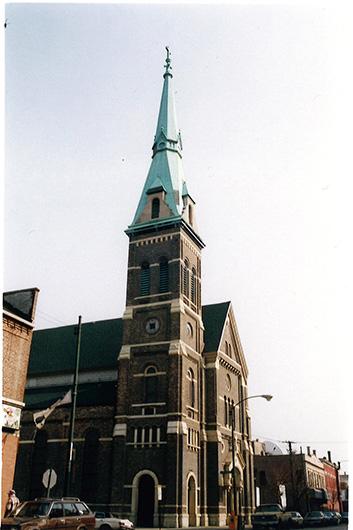
Maybe it was an inauspicious start, but St. Procopius-Providence of God Parish still stands tall, with parishioners worshipping in a Romanesque brick sanctuary dedicated in 1883 on the corner of 18th and Allport streets, just over a half-mile from the original site.
Since then, it has given rise to a suburban college, a national network of high schools, and the Archdiocese of Chicago’s first dual-language Catholic elementary school, as well as home for the Missionaries of Charity, who have maintained a contemplative convent on the parish campus for 40 years.
But what is special, parishioners said, is the community they have created.
“It’s the dedication of its parishioners, its volunteers,” said Cecilia Hernandez, who was baptized and raised in the parish. “When you need that help, when you need that prayer, when you feel a need for community, you can find it there.”
After its founding, the parish was placed into the hands of Bohemian Benedictines, then, after close to a century, given back into the care of archdiocesan priests.
Eight years later, the Jesuits began pastoring the parish as part of their “Pilsen Project,” an effort to assess and address the educational needs of the mostly Mexican and Mexican-American families who began filling the neighborhood in the mid-20th century.
Finally, in 2016, the Jesuits returned the parish to the care of the Archdiocese of Chicago.
Longtime parishioners say St. Procopius has thrived because of the willingness of its community to accept change.
“We’re kind of used to challenges, and because of that, we’re expecting that around the next corner, something new is going to come our way,” said Gelacio Rodríguez, who was also baptized at St. Procopius more than 50 years ago. “How do we deal with it? We’re open to new ideas. We’re open to accepting God’s plan for our community. That’s probably our biggest reason.”
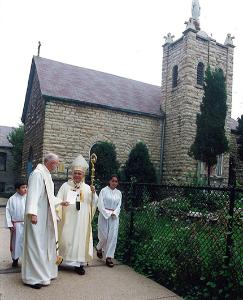
St. Procopius and its pastor, Dominican Father José Santiago, welcomed CardinalCupish at a 150th anniversary Mass Sept. 5. The Mass was followed by coffee and baked goods in the garden.
“The parish has just been a pillar that has stood in our community for these many years,” Hernandez said. “There are many changes still happening, with the different religious orders that have overseen our parish. I was overcome with joy that we’re still here.”
Hernandez and Rodríguez, who knew one another as children in the parish, are both catechists at St. Procopius. Their families were among the Mexican Americans who moved to Pilsen in the 1950s and 1960s, as the University of Illinois at Chicago displaced people living around St. Francis of Assisi Parish at Roosevelt Road and Halsted Street, which had been ministering to people from Mexico since the 1920s.
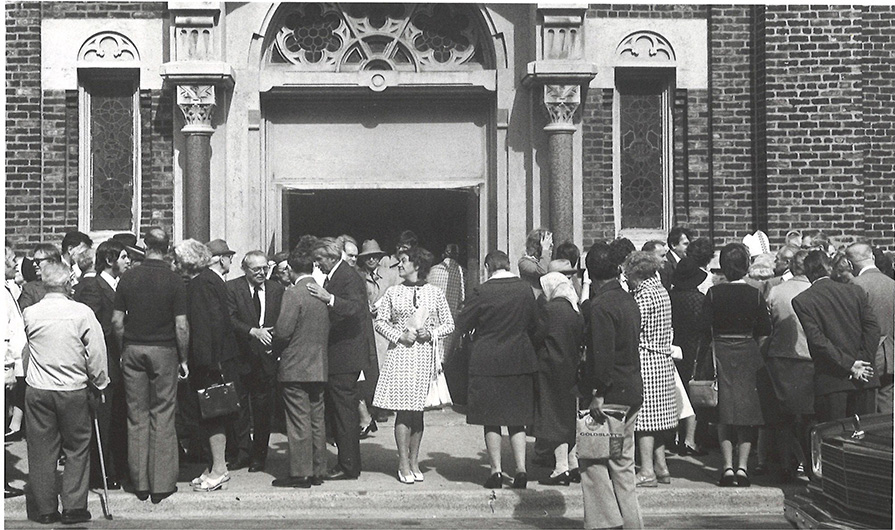
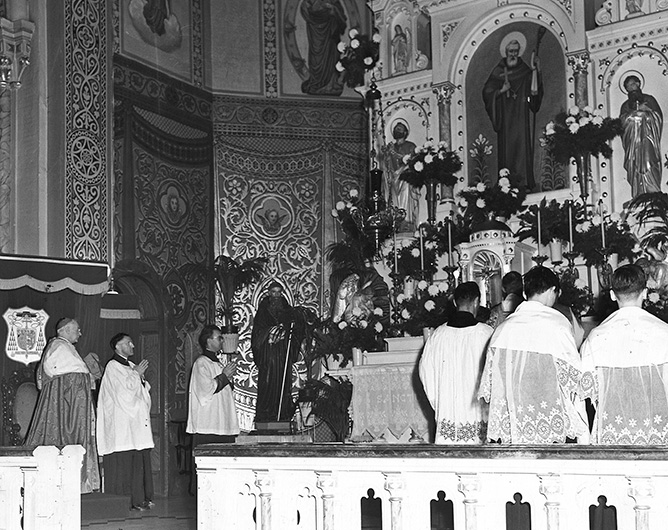
They came to a parish that had been a Bohemian powerhouse. It was the first home of the Czech Benedictine St. Procopius Abbey, which moved to Lisle in 1914 and created what would become Benedictine University, and the Bohemian Benedictine Press, which had several publications. The parish offered both elementary and high school education, which at one time enrolled more than 1,200 students.
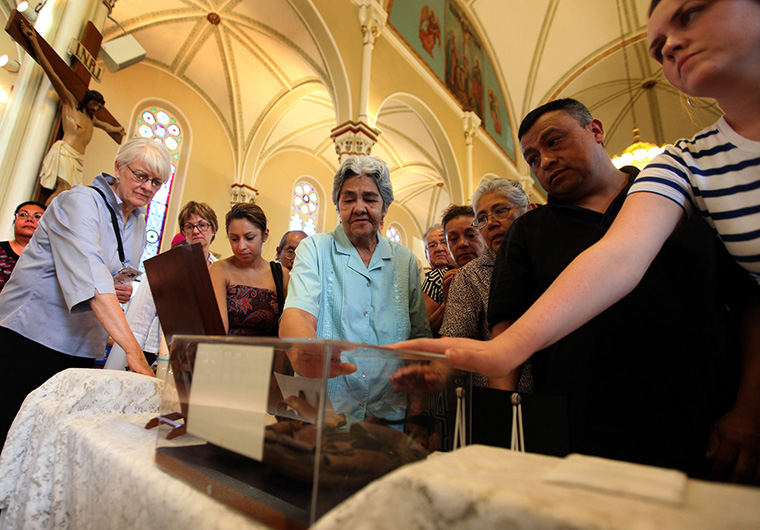
The Benedictines welcomed their new parishioners, starting both Spanish- and Czech-language weekly Masses in 1961. The following year saw the first novena to Our Lady of Guadalupe, and Cursillos were held at the parish beginning in 1966, the same year the shrine and garden of Our Lady of Guadalupe was dedicated.
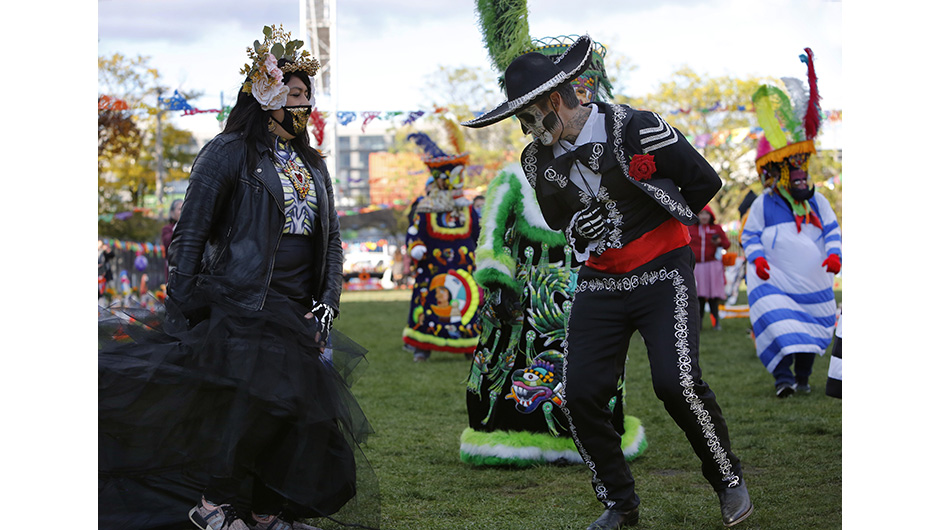
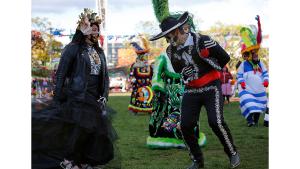
In the 1970s, St. Procopius started its “kermes,” or summer festivals, events Rodríguez remembers with joy, and the parish was one of the founders of the Pilsen Way of the Cross, which ends with the crucifixion scene in Harrison Park.
Then, in 1986, the Benedictines left and the parish was once again administered by archdiocesan priests.
Father Ted O’Keefe, the first archdiocesan pastor in more than a century, started a parish pastoral council, welcomed a charismatic prayer group and began organizing small Christian communities within the parish, an effort continued by Father Don Nevins, who became pastor in 1989.
O’Keefe also welcomed the Missionaries of Charity, St. Teresa of Kolkata’s religious community, who established a contemplative convent and house of formation on the campus.
In 1990, St. Procopius joined other Pilsen parishes in establishing the Resurrection Project, a community organization that does social outreach and works to provide affordable housing.
Two years later, the Jesuits’ Chicago Province took responsibility for the parish as part of its “Pilsen Project,” which led to the creation of Cristo Rey Jesuit High School. The high school used a groundbreaking model of having students participate in corporate work-study programs in which their wages pay the majority of their tuition.
Cristo Rey High School, opened in 1996, is specifically for students who come from Spanish-speaking homes and works to maintain students’ Spanish language skills and culture. At around the time Cristo Rey opened, St. Procopius School began offering dual-language instruction in Spanish and English to its elementary school students as well.
As the neighborhood began to change again in the early 2000s, with more affluent residents moving in and some immigrants and first-generation Mexican-Americans moving further away, the Jesuits returned the parish to archdiocesan care in 2016.
That coincided with a wave of parish consolidations in Pilsen, and St. Procopius was united with Providence of God Parish, retaining both worship sites for a time. Now all Masses are at St. Procopius Church.
Hernandez said some of the changes brought sadness for her, especially when the Jesuits left, and that has helped her relate to new parishioners who have had to adopt a new church home.
“Everyone who came through the parish probably had the same feelings,” Hernandez said. “We change with the times. We continue to worship together. Anyone who wants to come through our doors and worship with the same faith that we all have is welcome.”
Rodríguez said that other parishes that have been consolidated with St. Procopius — not just Providence of God, but also Holy Trinity from 18th and Throop streets in 2004 — have brought their own groups and their own customs and traditions.
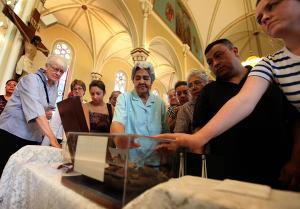
A cross from Holy Trinity was used in the Sept. 5 anniversary Mass, he said, and people from Providence of God were represented among the liturgical ministers.
“And the ladies’ social club from Holy Trinity — those are some really compassionate people. They’ve taken on the sale of baked goods,” he said.
The group provided the coffee and cake after the anniversary Mass, he said, and had enough left over to sell as a fundraiser after Sunday Masses the next day.
The club is reminiscent of the generation of women that Hernandez’s and Rodríguez’s mothers belonged to.
“My memory of all these women who have sustained our parish kind of renewed my commitment to the parish,” Hernandez said.
“There’s a lot of good people,” Rodríguez said. “I want to really give props to the generation before me. Without them, the doors would probably be closed. The women in our parish are the leaders. … I like to go on Sundays and see my mom’s friends who are still around and give them a smile.”