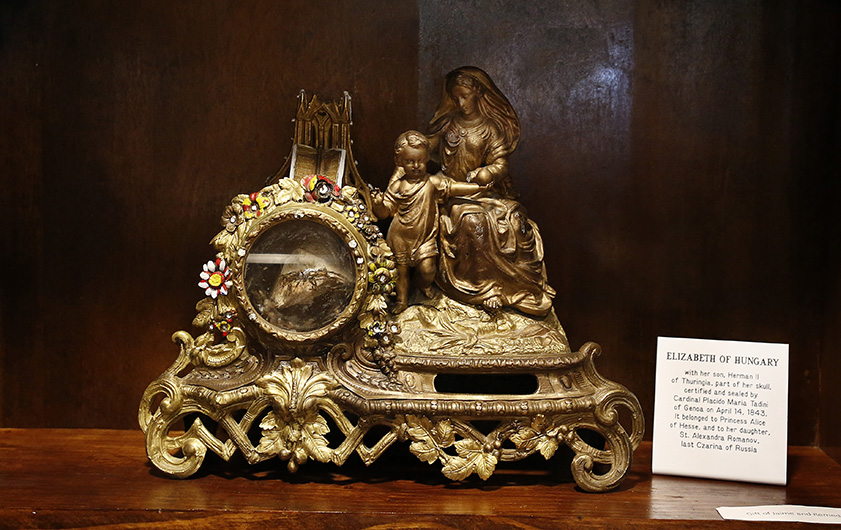
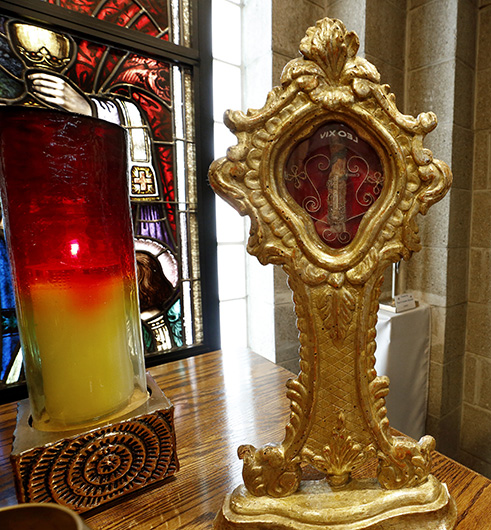
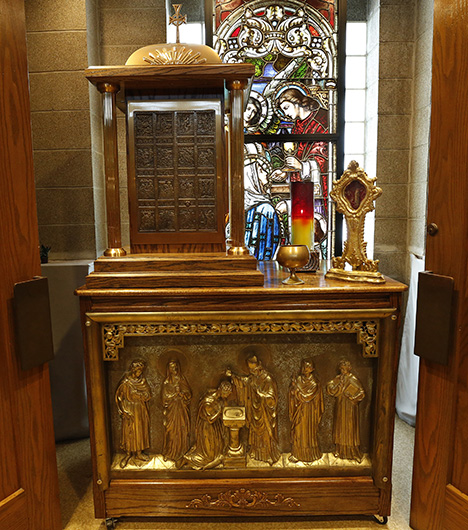
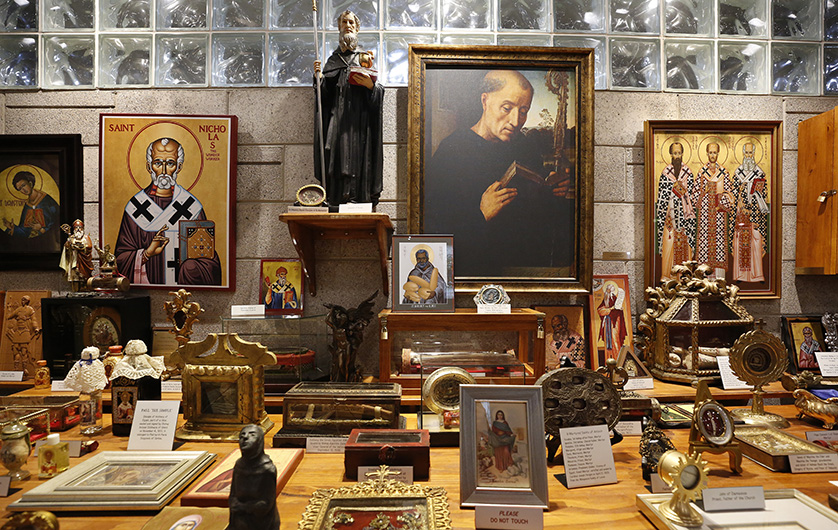
People in the Chicago area who want to get as close as they can to St. Francis of Assisi — or at least to his physical remains — during the Jubilee of St. Francis have several options.
Relics of the saint, the founder of Franciscan order that became the basis for what is now a family of religious communities, are on display for veneration at several sites. Those sites also have relics of other Franciscan saints, from St. Clare of Assisi, a contemporary of Francis, to St. Maximilian Kolbe, murdered at Auschwitz in 1941, and St. Padre Pio of Pietrelcina, who died in 1968.
Pope Leo XIV proclaimed the holy year on Jan. 10 in honor of the 800th anniversary of the death of St. Francis. It runs through Jan. 10, 2027.
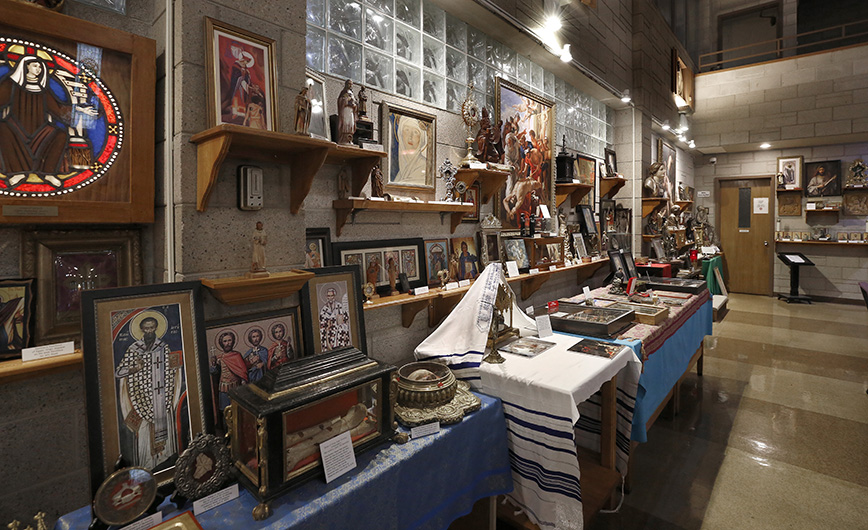
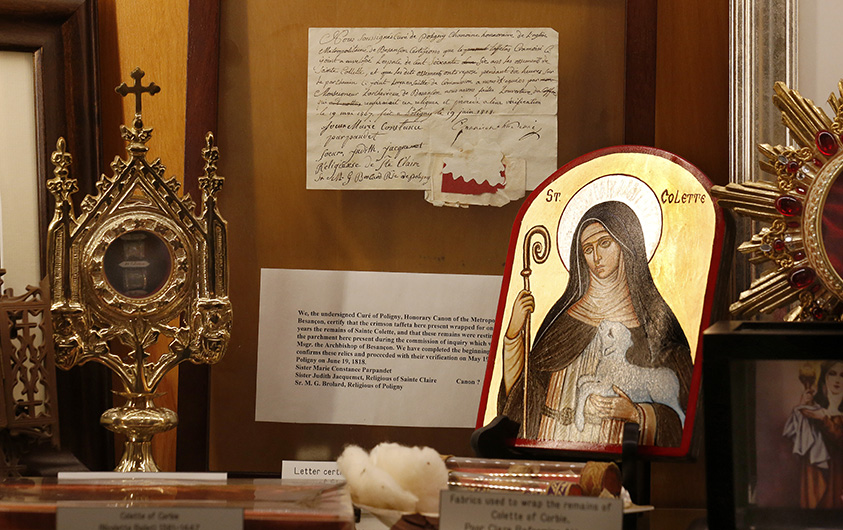
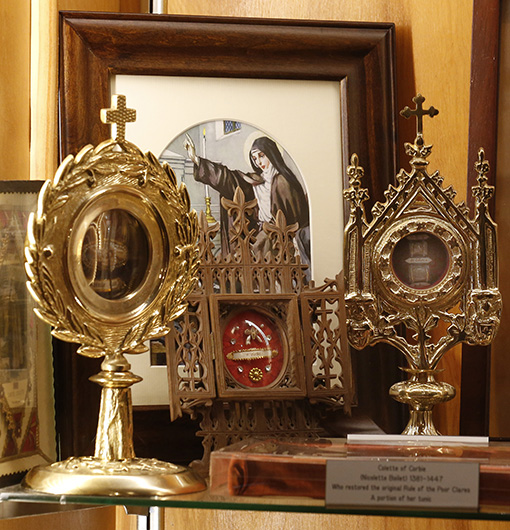
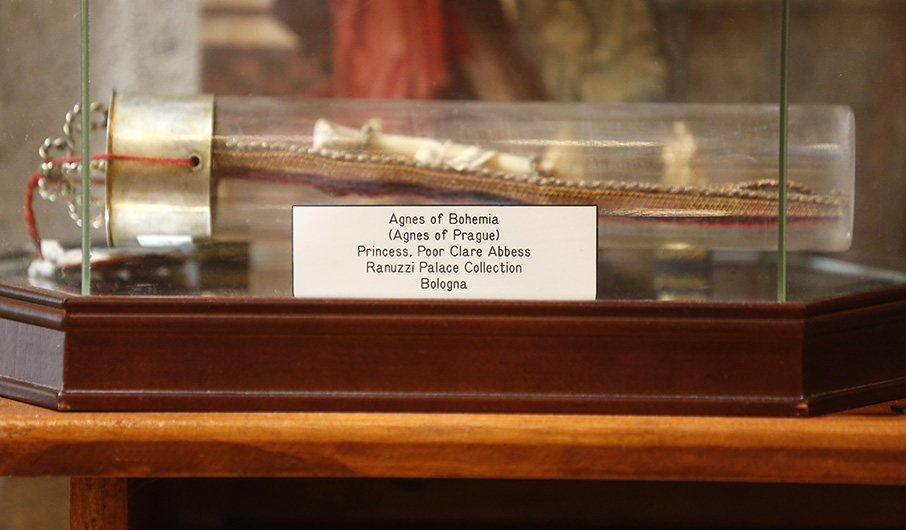
Father Dennis O’Neill, rector of the Shrine of All Saints, counts nearly a dozen Franciscan saints among the hundreds whose relics are housed at the shrine.
Relics, O’Neill said, can help connect the people who venerate them with the humanity of the saints, reminding people that the saints who are in heaven had bones, flesh and blood and, indeed, were just as human as those viewing the relic.
“Saints are always painted with halos,” O’Neill said. “But the halo is just their aura. We all have an aura.”
When people can think of saints as being really human, it makes it easier for people to believe that they, too, can live a holy life and become a saint as well, he added.
Most of the relics of Franciscan saints at the shrine, 8523 Georgiana Ave., Morton Grove, are first-class relics.
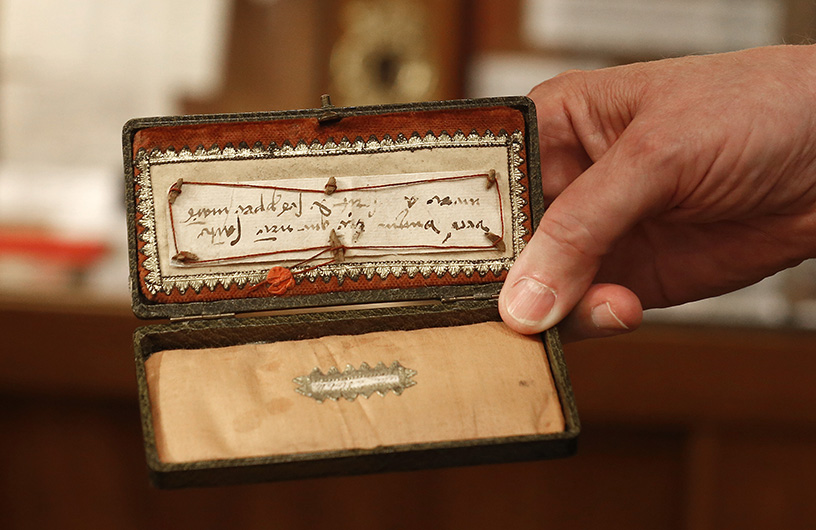
First-class relics include any parts of the body of the saint, as small as a drop of blood, fingernail clipping, tiny bone fragment or strand of hair, or as large as a complete bone.
Second-class relics are objects that the saints touched or used during their lives, including clothing, altar vessels or everyday implements such as writing instruments or eyeglasses. Third class relics are objects that have been touched to first- or second-class relics.
O’Neill said relics began to be distributed as a way to allow members of the faithful who could not undertake a long journey to a saint’s tomb to also visit the remains of holy people, similar to the way the Stations of the Cross brought the Via Dolorosa from Jerusalem to churches all over the world.
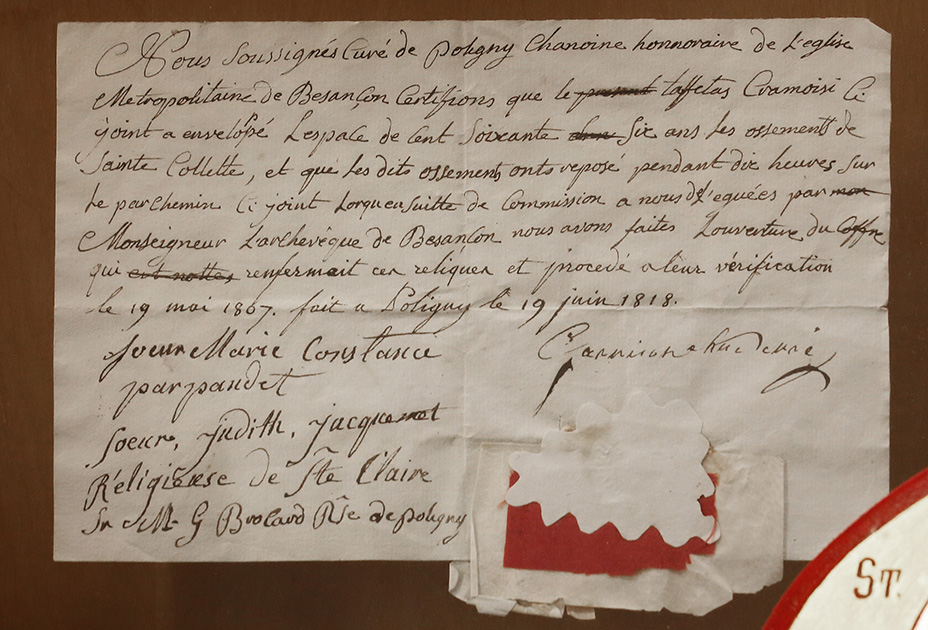
Many of the relics on display at the shrine come from churches, especially in Europe, that have been closed, O’Neill said. People who know him give him relics because they know they will be displayed instead of hidden away. For some, he purchases the reliquary, or the container in which the relics are sealed; buying and selling relics themselves would be the sin of simony.
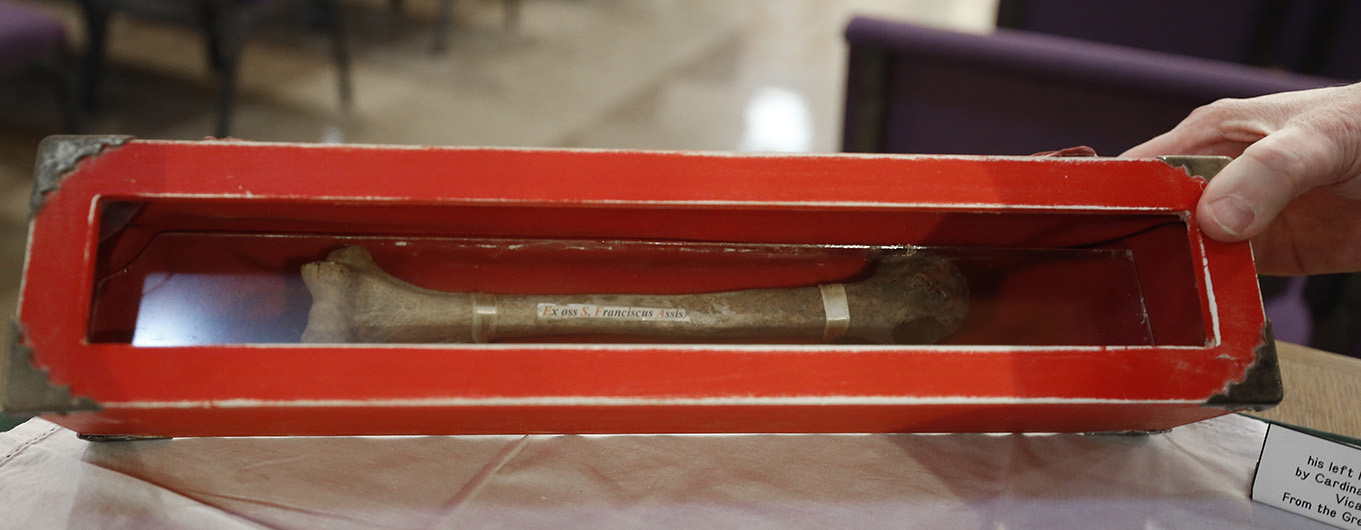
The largest Franciscan relic at the Shrine of All Saints is the left humerus (upper arm bone) of St. Francis, O’Neill said. The shrine also houses a heel bone of the saint, as well as a vertebra of St. Clare of Assisi.
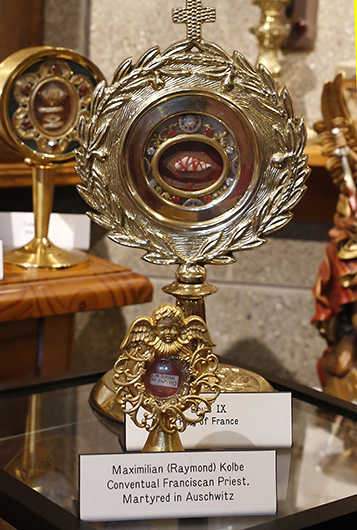
A second-class relic at the shrine is a chalice used by Padre Pio, O’Neill said. The shrine also is home to a snip of hair trimmed from the beard of St. Maximilian Kolbe, a Polish Conventual Franciscan friar, before he was imprisoned in Auschwitz. The saint’s body was cremated at Auschwitz on Aug. 15, 1941, the day after he died.
Conventual Franciscan Father Alejandro López, pastor of Mary, Mother of God Parish, said that is because the Conventual Franciscan barber who cut St. Maximilian’s hair in the monastery believed him to be holy and saved the trimmings.
The National Shrine of St. Maximilian Kolbe at Marytown in Libertyville is run by the Conventual Franciscans and also houses several Franciscan relics.
Mary, Mother of God Parish’s St. Ita Church also houses a number of Franciscan relics, including St. Francis, St. Clare, St. Maximilian Kolbe, St. Anthony of Padua, and Third Order Franciscan saints Elizabeth of Hungary and Louis IX of France. Third Order Franciscans follow the spiritual way of St. Francis while living in the world.
López noted that the veneration of relics is considered a devotion for Catholics, something that might help people deepen their faith but something which is not required. While some Catholics love venerating relics, others might not feel they get anything out of it, he said.
It’s also important to distinguish between venerating relics and adoring the Eucharist, a form of worship. Veneration shows respect to the saints, holy people who have lived before. Their relics offer Catholics a way to feel close to them, López said, much as people keep photos and mementos of deceased relatives or even collect autographs of celebrities they admire.
Adoration is a form of worship reserved for God, who is present in the Eucharist.
Brother Joshua Smerker, a Canon Regular of St. John Cantius, said that it’s clear people are attracted to relics.
St. John Cantius Church, 825 N. Carpenter St., keeps all 3,500 or so of its relics in glass cases in a hall near the sacristy on the side of the church with the side altar dedicated to Mary, Brother Joshua said, and sometimes the canons have a hard time making their way to the sacristy because of people looking at the relics.
“The curiosity is coming out,” Brother Joshua said. “They are so eager, they are like kids. They want to know, ‘Who is this?’ This is our Catholic faith. They want to be close to that person.”
Both Mary, Mother of God Parish and the National Shrine of St. Maximilian Kolbe are among several pilgrimage sites where people can obtain a plenary indulgence during the jubilee year; to learn more, visit archchicago.org/news-and-events/st-francis-jubilee.
To visit the Shrine of All Saints, call 847-779-0735 or email [email protected] to set up an appointment. St. Ita Church is open for daily and weekend Masses; for Mass times, visit motherofgodchicago.org. St. John Cantius Church is open from 6 a.m. to 7 p.m. every day; for Mass times, visit cantius.org.