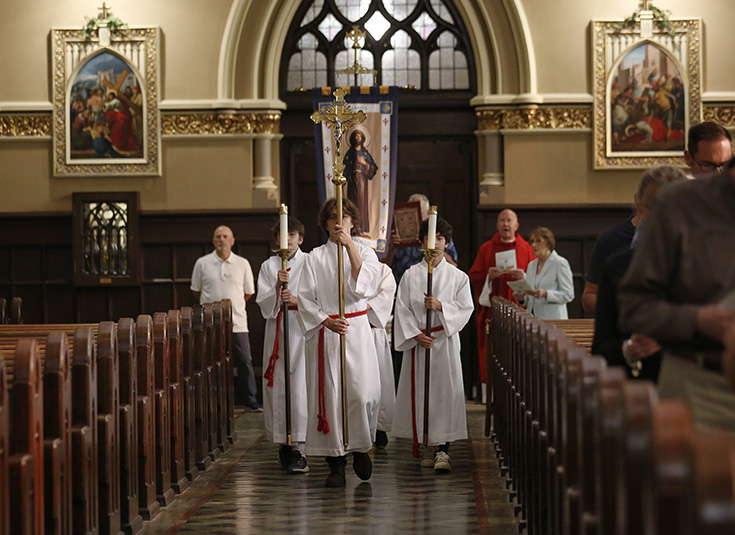
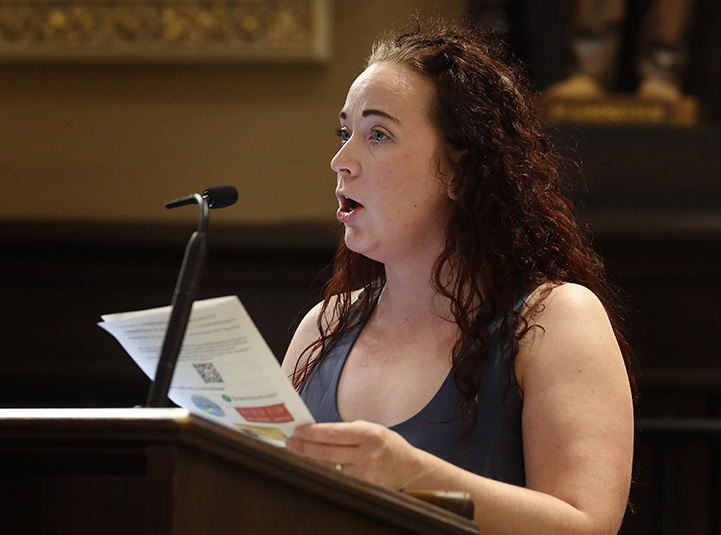
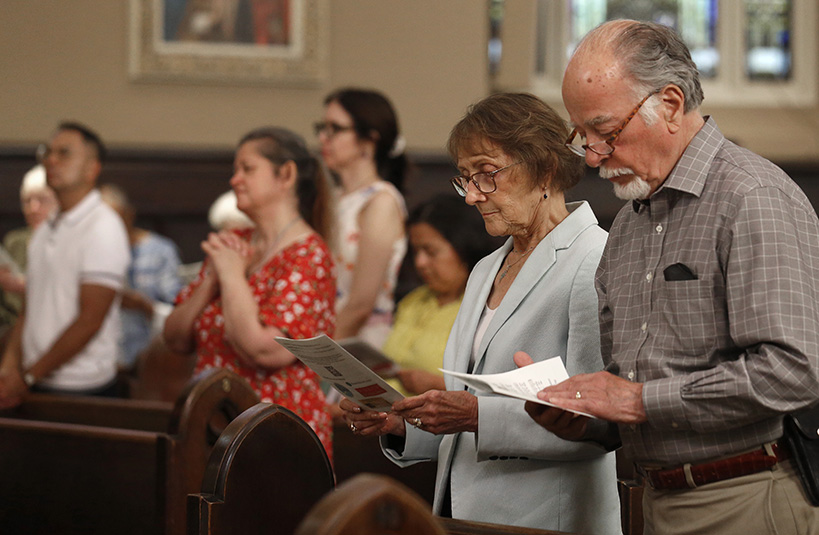
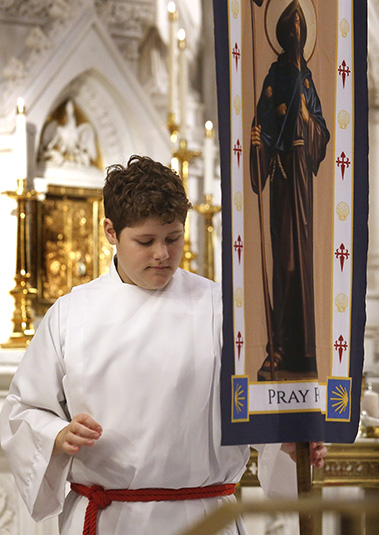
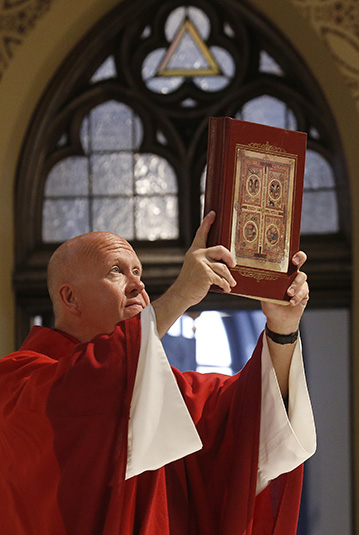
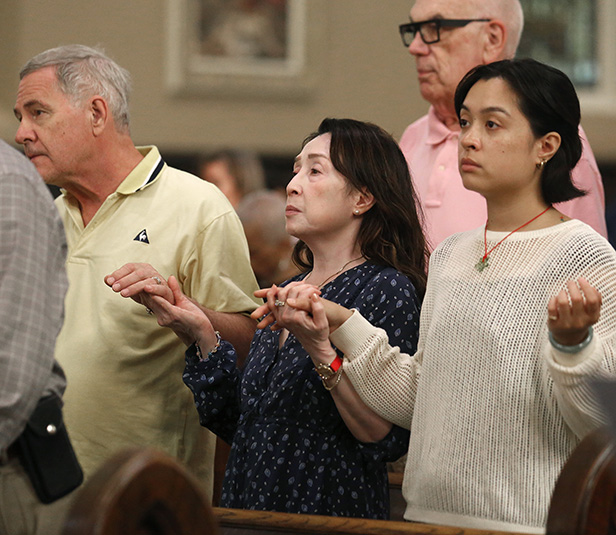
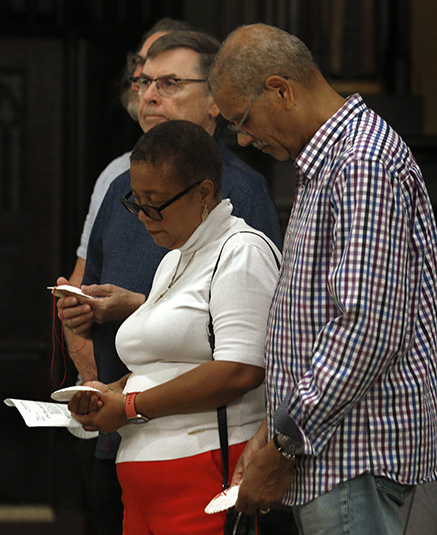
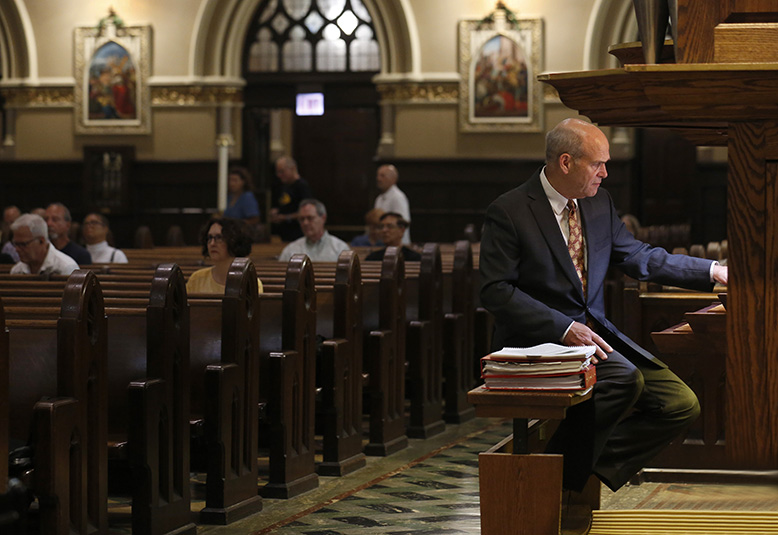
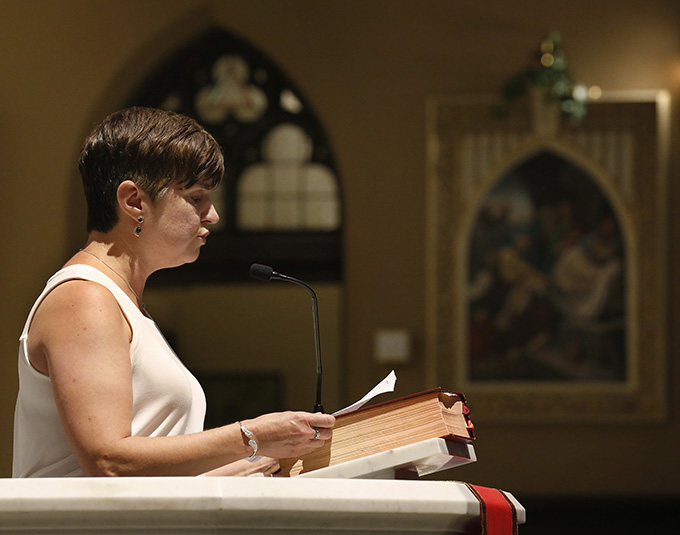
Chicago-area Catholics who have taken part in El Camino de Santiago, or the Way of St. James, gathered for Mass on the eve of the feast of St. James, July 24 at Our Lady of Mount Carmel Church, 708 W. Belmont Ave., to share stories and celebrate the spirit of the historic pilgrimage.
Vincentian Father Chris Robinson, a veteran of four Caminos, organized the second-annual gathering.
“I think the Camino is a parable of how the world could be, because there are so many different cultures, age groups, generations, colors and there are no barriers. There are no boundaries,” Robinson said.
Each year, over 1 million people take part in the 1,000-year-old walking pilgrimage, which encompasses 12 routes to the Cathedral of Santiago de Compostela in northwest Spain from various parts of Europe.
The pilgrimage ends at what is believed to be the tomb of the apostle, St. James. It is the third most historic pilgrimage for Christians, after Rome and Jerusalem.
The pilgrimage to Santiago became popular in the Middle Ages, and both the Catholic Church and religious communities developed infrastructure and hospitality sites and hospitals around the routes to support it.
It has seen a resurgence in recent times, especially in the United States, where both believers and non-believers make the trek.
Robinson has made it his mission to promote the Camino and mentor others who are making the pilgrimage for the first time. He loves the experience so much he even has tattoos of the traditional pilgrim symbols — a shell and the St. James cross — on his inner forearms.
Robinson helps with Masses at Our Lady of Mount Carmel on the weekends, and said he received a confirmation from God in the church that he was on the right path before he did his first 500-mile Camino.
“The first weekend I started here, and I hadn’t been in this church in 30 years, and I walked in, saw the window of St. James, and I thought, ‘It’s a sign,’” he said.
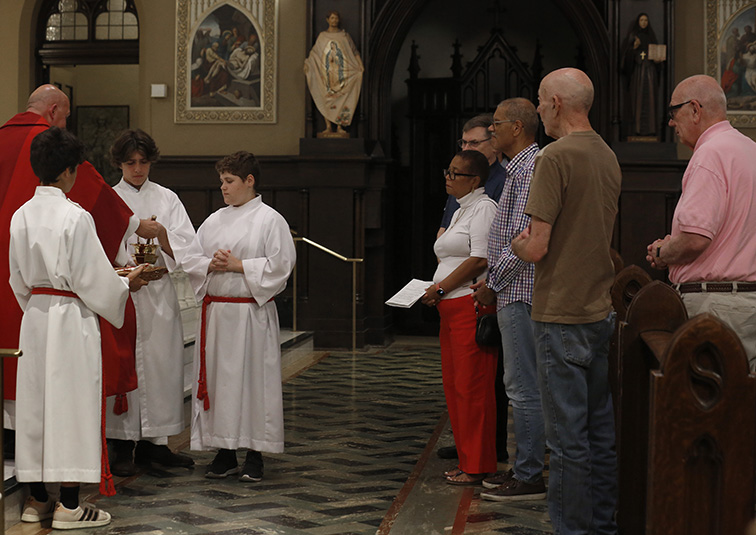
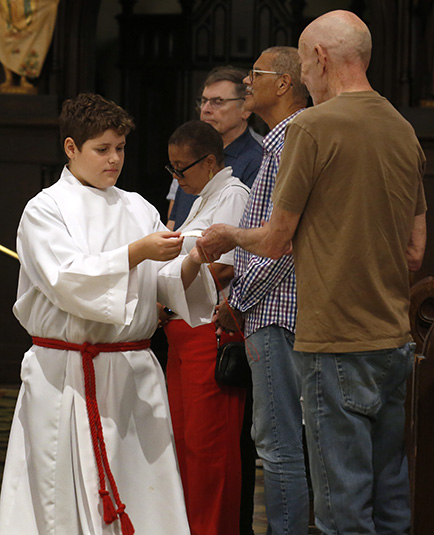
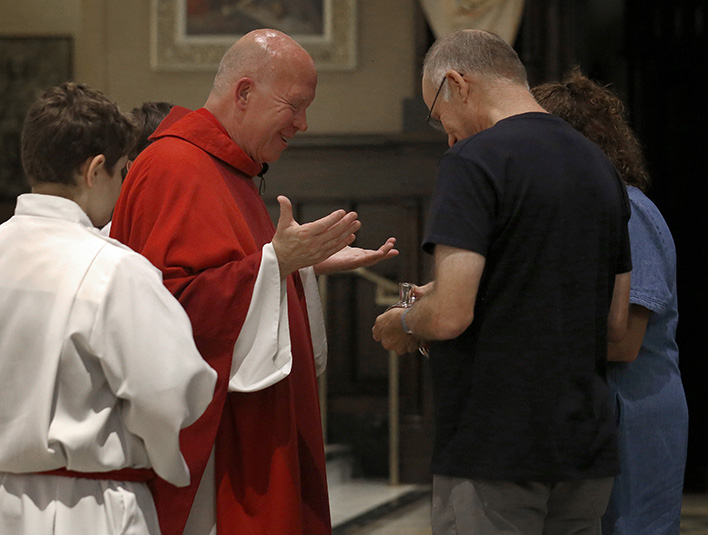
After Communion, Robinson invited people who will make a Camino in the upcoming years to step forward. He gave them a blessing and a shell, the pilgrimage’s symbol.
Camino veterans from across the archdiocese came for the Mass and gathering.
St. Barnabas parishioner Heather Linehan took the Portuguese route for her Camino. That route starts in Portugal and goes north to Santiago, is roughly 400 miles and is believed to be the second most popular route.
Linehan, who sported blue shell earrings and a necklace for the occasion, said the Camino opened her eyes to the universality of the Catholic Church. No matter where she went, she knew when she went into a Catholic church she would understand the Mass and the images because they are the same everywhere.
The experience also taught her to slow down.
“I allowed myself more grace. I couldn’t be really hard on myself and push myself too hard,” she said.
“Everybody comes from a different place of why they went, and what they do with it afterwards,” said Melissa Flynn, a teacher at DePaul College Prep, who took the Camino’s Francés route, which is the most popular and is 479 miles.
“People are doing Camino for different reasons, but you just connect with people throughout. You may connect with them for a day and spend the day together. You may connect on and off in the evening, coffee shops and everything,” said Flynn, whose pilgrimage took almost two months.
She met a group of seminarians from Cleveland along the way and ended up walking with them.
“The pilgrim Masses at night were amazing. It didn’t matter what language you spoke. Everyone sort of came together with the pilgrim blessing,” she said.
Rob and Mary Karen Reynolds just returned from their Camino in June. They, like Linehan, took the Portuguese route.
Rob Reynolds said one of the takeaways from his pilgrimage is that people need to be more curious.
“We are not curious enough about our world and the people in it,” he said.
You don’t have to have a reason to do Camino before you go, he said.
“Many people are doing the Camino for different reasons. And some people really don’t even have a reason, right? They just want to do it. Maybe they haven’t identified it yet. Maybe by the end they articulate it,” Reynolds said.